 General
Termite infestations are often difficult to detect in their early stages because most termite activity takes place beneath the surface. By the time visible signs such as damaged wood, mud tubes or discarded wings appear, the infestation may already have spread to multiple areas of a property.
For homeowners and businesses, early identification is important not only to control the infestation but also to prevent progressive damage to wooden structures, interiors and valuable assets. A professional termite inspection can help determine the extent of activity and identify the most suitable treatment approach.
At SIPC – The Pest Doctor, we provide professional termite management solutions designed to address active infestations while helping reduce the risk of recurring termite problems.
Signs That Your Property May Have a Termite Infestation
Termites do not always leave obvious signs. Regular inspection of vulnerable areas can help identify an infestation before significant damage occurs.
Mud Tubes Along Walls and Foundations
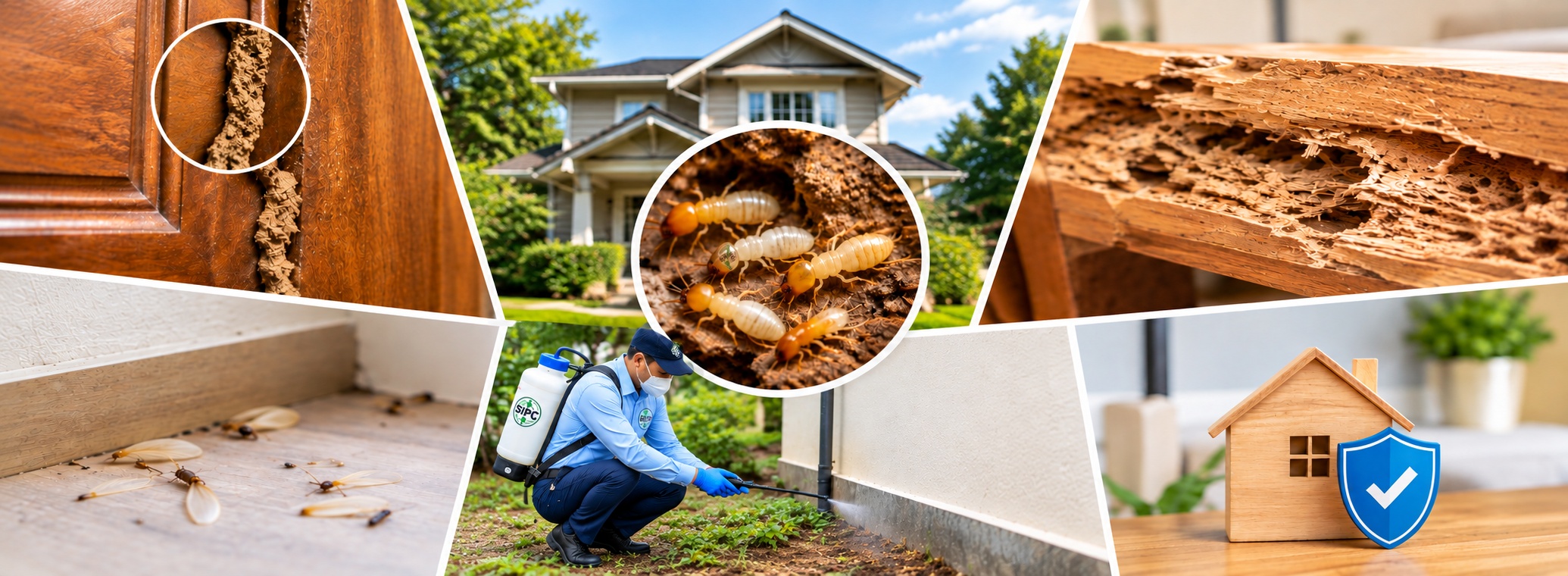
Mud tubes are one of the most recognizable signs of subterranean termite activity. They may appear along foundations, walls, pillars, floor edges or other areas connecting the soil with the structure.
These narrow pathways allow termites to move safely between their colony and food source.
Hollow or Weak Wooden Structures
Termites can consume wood from within, leaving the outer surface relatively intact. Wooden doors, frames, cupboards, flooring and furniture may gradually become hollow, weak or damaged.
If tapping a wooden surface produces an unusually hollow sound, professional inspection may be advisable.
Swarmers and Discarded Wings
Winged termites, commonly known as swarmers, may emerge when a mature colony begins producing new reproductive members.
You may notice swarmers or piles of discarded wings around:
Windows
Doors
Light sources
Balconies
Wooden structures
The presence of swarmers can indicate an established termite colony nearby.
Small Holes, Cracks or Surface Damage
Small openings, damaged wooden surfaces and unusual cracks may sometimes indicate termite activity. These signs should be assessed along with other indicators rather than treated individually as proof of infestation.
Termite Droppings
Drywood termite activity can result in small, pellet-like droppings accumulating below infested wooden components. These may resemble fine grains or sawdust.
How Termites Can Damage Your Property
Termite damage can develop gradually and may remain unnoticed until the affected material has significantly weakened.
Depending on the location and severity of the infestation, termites can affect:
Wooden doors and window frames
Furniture and cupboards
Wooden flooring
Skirting and wall panels
False ceilings and partitions
Beams and other wooden components
Storage materials and cardboard
Commercial interiors and fixtures
For businesses, termite activity can become more than a maintenance issue. Damage to interiors, furniture, inventory or infrastructure can result in unexpected repair and replacement expenses.
This is why timely termite pest control is an important part of property maintenanceWhy Early Termite Detection Matters
One of the biggest challenges with termites is that visible damage does not always represent the full extent of the infestation.
A colony may be established inside soil, walls, flooring or concealed wooden components while activity remains unnoticed.
Early professional assessment can help:
Identify active termite zones
Locate potential entry points
Assess the extent of damage
Identify moisture-prone areas
Determine suitable treatment requirements
Establish preventive measures
Instead of treating only the visible signs, professional termite treatment focuses on understanding the infestation and selecting an appropriate control strategy.
Professional Termite Treatment: What Does It Involve?
The appropriate treatment depends on several factors, including the construction of the property, termite species, infestation level, moisture conditions and areas affected.
A professional termite management program may involve a combination of inspection, targeted treatment and preventive measures.
Soil and Barrier Treatment
For subterranean termite activity, suitable soil treatment and chemical barrier applications can help reduce termite entry and movement around vulnerable areas of a structure.
Targeted Wood Treatment
Where termite activity is associated with wooden components, targeted treatment may be carried out on affected or vulnerable areas.
Post-Construction Termite Treatment
Existing homes, offices, commercial buildings and other properties may require post-construction termite treatment when infestation is detected.
The treatment approach is determined according to the building structure and location of termite activity.
Pre-Construction Termite Protection
For new construction projects, termite protection can be incorporated during appropriate construction stages. This helps create a preventive barrier before the building is occupied.
Preventive Termite Management
Properties with previous termite history may benefit from periodic inspections and preventive measures to identify renewed activity at an early stage.
What Is the Best Treatment for Termites?
There is no single best treatment for termites that is suitable for every property.
The right treatment depends on:
Type of termite activity
Location of the infestation
Building construction
Extent of damage
Soil and moisture conditions
Areas vulnerable to future infestation
For this reason, professional inspection should generally come before treatment.
A qualified pest management team can assess the property and recommend a solution based on the actual conditions rather than applying the same treatment everywhere.
Why Professional Termite Control Is Better Than Temporary DIY Solutions
Visible termites can sometimes tempt property owners to rely on readily available products. However, eliminating the insects that are visible does not necessarily address the underlying colony or hidden activity.
Professional exterminator services provide a more comprehensive approach by combining inspection, identification, treatment and prevention.
This is particularly important when:
Termite activity keeps returning
Damage is spreading
Mud tubes are visible
Wooden structures are weakening
Termites are appearing in multiple areas
The property has a previous history of infestation
Professional intervention can help identify the source of the problem and determine a more appropriate long-term management strategy.
How to Reduce the Risk of Future Termite Infestation
Treatment should ideally be followed by preventive property maintenance.
Control Moisture
Repair leaking pipes, taps, drainage problems and other sources of excess moisture. Damp areas can create favourable conditions for termite activity.
Inspect Wooden Components Regularly
Pay particular attention to doors, frames, cupboards, flooring, skirting, wooden partitions and storage areas.
Avoid Wood-to-Soil Contact
Where possible, prevent direct contact between untreated wood and soil around the property.
Maintain Proper Ventilation
Adequate ventilation in storage areas, basements and other enclosed spaces can help reduce moisture accumulation.
Manage Cardboard and Wooden Waste
Avoid storing cardboard, paper and unused wooden materials for long periods, especially in damp or poorly ventilated areas.
Schedule Professional Inspections
Properties that have experienced termite activity in the past should be monitored periodically. Early detection can help prevent a small problem from becoming a major infestation.
When Should You Contact a Termite Control Professional?
Professional inspection should be considered if you notice:
Mud tubes
Winged termites
Discarded wings
Hollow or weakened wood
Termite droppings
Repeated termite activity
New or unexplained wooden damage
If you are searching online for termite treatment near me, don't simply choose a service based on price. Consider the company's experience, treatment approach, technician expertise and ability to inspect the property before recommending a solution.
SIPC – Professional Termite Pest Control Solutions
SIPC – The Pest Doctor provides professional pest control services for residential, commercial and industrial properties.
Our termite management approach is focused on identifying the infestation, assessing vulnerable areas and recommending a suitable treatment plan for the property.
With trained technicians, advanced pest management methods and government-approved chemicals, SIPC provides customized solutions for different types of termite problems.
Our termite management solutions include:
Termite inspection
Residential termite treatment
Commercial termite control
Pre-construction termite protection
Post-construction termite treatment
Preventive termite management
Customized pest management solutions
Whether you have identified early signs of termite activity or are concerned about recurring infestation, professional assessment can help you take the right corrective action.
Protect Your Property Before Termite Damage Becomes Costly
Termites may remain hidden, but the damage they cause can become increasingly difficult and expensive to address if left untreated.
Identifying warning signs early, maintaining the property properly and choosing professional deemak treatment when required can help protect wooden structures, interiors and valuable property assets.
Don't wait for visible damage to become extensive. If you suspect termite activity, arrange a professional inspection.
📞 Book Your Free Site Inspection with SIPC
Get professional termite treatment and pest control solutions from SIPC – The Pest Doctor.