 General
Mosquitoes are a common problem for many households in Kochi, especially during the rainy season and periods of high humidity. Even after cleaning your home and using mosquito repellents, you may continue to notice mosquitoes in bedrooms, balconies, gardens and outdoor spaces.
The main reason is often hidden mosquito breeding spots. Mosquitoes can lay eggs in stagnant water collected in flowerpot trays, buckets, roof drains, discarded containers and other overlooked areas.
Regular cleaning can help, but identifying and removing these breeding sources is equally important. In this guide, we explain why mosquitoes keep breeding around your home, how to identify hidden breeding spots and when professional mosquito control can help.
1. Why Do Mosquitoes Keep Breeding Around Your Home?
Mosquitoes need suitable water sources to complete their early life stages. When water remains undisturbed in containers or blocked drainage areas, it can become a breeding ground.
Some common reasons for increasing mosquito activity in Kochi include:
Frequent rainfall: Rainwater collects in plant trays, discarded containers, tyres and other outdoor objects.
High humidity: Warm, humid conditions can support mosquito activity when suitable breeding sites are available.
Blocked drains: Poor drainage can leave stagnant water around buildings and outdoor spaces.
Uncovered water storage: Water tanks, buckets and other containers may allow mosquitoes to enter and lay eggs.
Neglected outdoor areas: Gardens, terraces, balconies and unused spaces may contain hidden water collection points.
Mosquitoes may also enter your property from nearby breeding areas. Therefore, a clean home does not always mean there will be no mosquitoes.
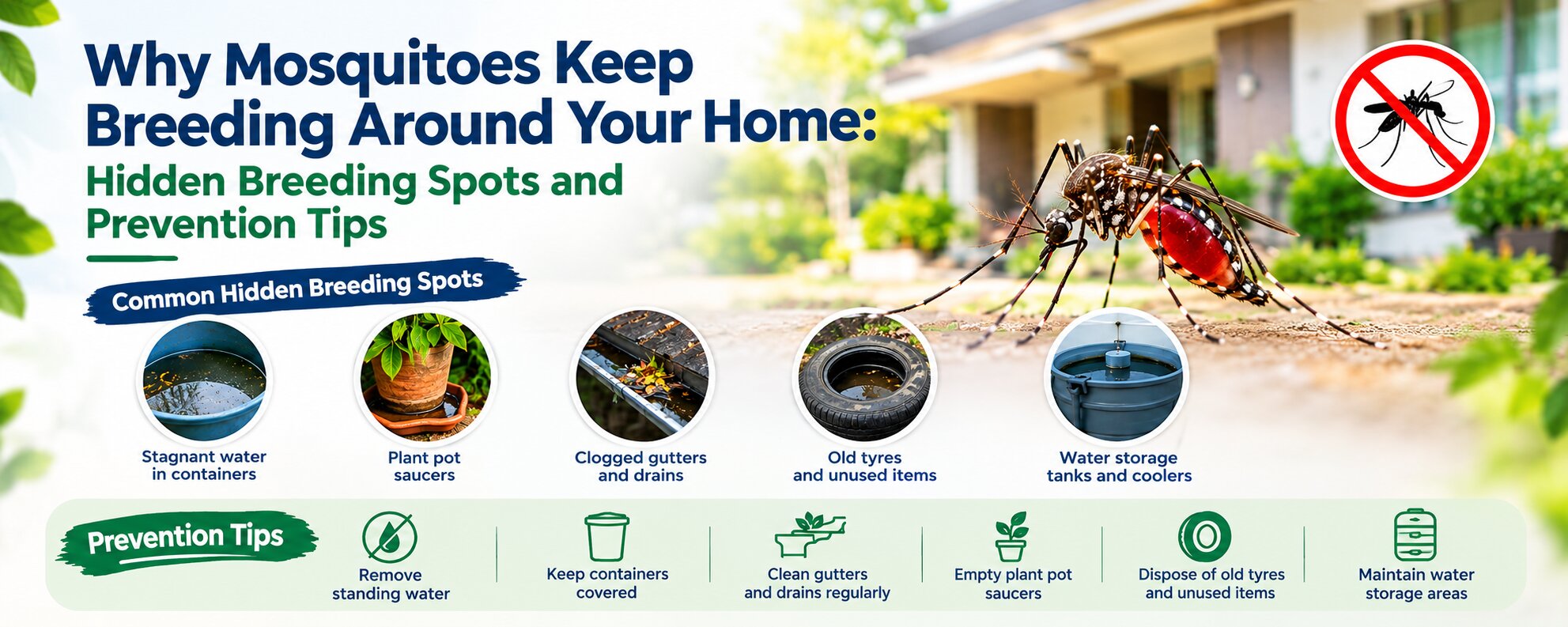
2. Hidden Mosquito Breeding Spots You Should Check
One of the most effective mosquito prevention tips is to inspect areas where water collects, even in small quantities.
Flowerpots and Plant Trays
Flowerpots are common in Kochi homes, apartments and gardens. Water can collect in the trays beneath pots after watering plants or rainfall.
What you can do: Empty the trays regularly, scrub them to remove mosquito eggs where applicable, and avoid leaving standing water for several days.
Roofs, Terraces and Blocked Drains
Leaves, dirt and waste can block roof drains and rainwater outlets. This allows water to collect on terraces and around drainage points.
What you can do: Inspect terrace drains after rainfall, remove debris safely and arrange repairs if water repeatedly accumulates.
Water Tanks, Buckets and Storage Containers
Uncovered water tanks, unused buckets, drums and storage containers can provide suitable breeding places.
What you can do: Keep water storage containers tightly covered. Empty and clean unused containers, and check tank lids and openings regularly.
Discarded Tyres, Bottles and Scrap Items
Old tyres, plastic bottles, coconut shells, cans and discarded household items can collect rainwater outdoors.
What you can do: Dispose of unwanted items properly, store useful containers upside down and prevent rainwater from collecting in scrap materials.
Air Conditioner Trays and Other Water Collection Points
Air conditioner drain trays, refrigerator drip trays and other equipment that collects water may be overlooked during routine cleaning.
What you can do: Check these areas regularly, clear blockages and ensure water drains properly. Follow the equipment manufacturer's maintenance instructions.
Gardens, Yards and Construction Areas
Low-lying ground, uncovered pits, unused containers and poorly drained outdoor areas can retain rainwater. Construction sites may also have water collecting in slabs, tanks or equipment.
What you can do: Improve drainage where possible, remove unnecessary containers and ensure water does not remain standing in outdoor spaces.
3. Warning Signs of a Mosquito Problem
Recognising mosquito activity early can help you take action before the problem becomes more difficult to manage.
Look for these common signs:
Mosquitoes appear repeatedly in bedrooms, bathrooms, balconies or gardens.
Frequent mosquito bites during the day or evening.
Mosquitoes gathering in shaded, damp areas around your property.
Standing water in containers, plant trays, drains or rooftop areas.
Small, moving larvae in stagnant water.
Mosquito larvae may look like tiny moving organisms in water. However, you do not need to wait until larvae are visible before removing stagnant water.
Mosquitoes can transmit diseases such as dengue, malaria and chikungunya. If anyone develops symptoms such as fever, severe headache, body aches or a rash, seek medical advice rather than assuming the illness is caused by ordinary mosquito bites.
4. How to Prevent Mosquito Breeding at Home
Following a regular prevention routine can help reduce mosquito breeding and make your surroundings more comfortable.
Follow a Weekly Water Check
Inspect your balcony, garden, terrace, bathrooms, roof drains and other areas where water may collect. Empty, scrub, cover or remove water-holding items as appropriate.
Keep Water Tanks Covered
Use secure, mosquito-proof covers for overhead and underground water tanks. Repair damaged lids and openings that may allow mosquitoes to enter.
Maintain Proper Drainage
Clear blocked drains and rainwater outlets. Repair leaking pipes and address areas where water repeatedly collects around your property.
Maintain Your Garden
Trim overgrown vegetation, remove discarded containers and keep outdoor spaces clean. Plants themselves do not create mosquitoes, but containers holding stagnant water around them can support breeding.
Install Window and Door Screens
Repair damaged screens and keep doors closed when possible. These steps help reduce the number of mosquitoes entering your home.
Use Personal Protection
Use suitable mosquito repellents according to their labels, wear clothing that covers exposed skin when appropriate and use mosquito nets where needed.
These steps are useful for mosquito control for homes, but they may not completely resolve a recurring problem if hidden breeding sources remain or mosquitoes continue entering from surrounding areas.
5. Common Mosquito Control Mistakes to Avoid
Even when homeowners take preventive steps, some mistakes can allow mosquito problems to continue.
Using mosquito sprays without checking breeding spots: Sprays may reduce adult mosquitoes temporarily, but they do not necessarily remove the water sources where new mosquitoes develop.
Cleaning only indoor areas: Mosquitoes may breed outdoors in plant trays, roof drains, discarded containers and water storage areas. Indoor cleaning alone may not solve the problem.
Ignoring small amounts of stagnant water: Small containers can become suitable breeding sites. Check plant saucers, buckets, bottle caps and equipment trays rather than focusing only on large pools of water.
Leaving water storage containers uncovered: Uncovered containers may allow mosquitoes to lay eggs. Use secure covers and inspect stored water regularly.
Using chemicals without proper guidance: Do not pour kerosene, diesel or household chemicals into drains, ponds or water storage areas. Never mix pesticides or use them contrary to their labels. Seek professional advice for water sources that cannot be emptied or covered.
6. When Should You Consider Professional Mosquito Control in Kochi?
Home prevention is essential, but professional help may be useful when mosquitoes keep returning despite regular cleaning and water management.
Consider professional mosquito control in Kochi if:
Mosquitoes remain a persistent problem inside your home.
Your garden, terrace or outdoor seating area has heavy mosquito activity.
You manage an apartment complex, hotel, restaurant, office or commercial property with recurring mosquito issues.
Hidden breeding sources are difficult to identify.
You need a planned approach to mosquito prevention across a larger property.
Professional mosquito control generally begins with an inspection of the affected areas. Depending on the site conditions, the treatment plan may include recommendations to remove breeding sources and appropriate targeted treatments for mosquito breeding or resting areas.
Treatment alone cannot guarantee that mosquitoes will never return, particularly when nearby properties or untreated water sources continue to support breeding. Ongoing inspection and preventive maintenance remain important.
7. Residential and Commercial Mosquito Control Services
Different properties may require different mosquito management approaches.
Residential Mosquito Control Services
Residential mosquito control services can help homeowners address recurring mosquito problems in houses, apartments, gardens, balconies and other living spaces.
The approach may include identifying potential breeding sources, recommending water management measures and selecting appropriate treatment options based on the property inspection.
Commercial Mosquito Control Services
Commercial mosquito control services are relevant for offices, hotels, restaurants, warehouses, educational institutions and other business premises.
Mosquitoes can affect employee comfort, customer experience and the usability of outdoor areas. Regular inspections, proper drainage and suitable preventive measures can help businesses manage mosquito activity more effectively.
For both residential and commercial properties, combining source reduction with appropriate professional treatment is important for sustainable mosquito management.
8. Choosing Mosquito Treatment in Kochi
If mosquitoes continue to affect your property despite preventive measures, mosquito treatment in Kochi may help address the problem more systematically.
Before choosing a service, consider whether the provider:
Inspects the property for potential mosquito breeding sources.
Explains the recommended treatment and preventive measures.
Selects suitable methods based on the property and the infestation.
Provides clear instructions about precautions before and after treatment.
If you are searching online for mosquito control near me, choose a service that considers the underlying causes of mosquito activity rather than focusing only on reducing visible mosquitoes.
Professional treatment works best when combined with regular cleaning, standing-water removal and preventive maintenance.
9. How SIPC – The Pest Doctor Can Help
SIPC – The Pest Doctor provides pest control services for residential and commercial properties. If mosquitoes are repeatedly affecting your home or workplace, professional mosquito control can help you assess the problem and identify suitable control measures.
SIPC can help customers explore suitable mosquito management options based on their property and service requirements, including:
Inspection of affected areas and potential breeding sources.
Recommendations to reduce standing water and mosquito entry points.
Appropriate treatment options based on the property and level of mosquito activity.
Preventive guidance to help reduce the chances of recurring mosquito problems.
Whether you need mosquito control for your house, apartment, garden, office or commercial premises, addressing the causes of the problem is an important part of effective mosquito management.
For those looking for professional mosquito control in Kochi, SIPC – The Pest Doctor can help you discuss your requirements and arrange a site inspection.
10. Keep Your Home and Surroundings Mosquito-Free
Mosquito prevention starts with small, consistent actions. Emptying plant trays, covering water tanks, clearing blocked drains and checking outdoor containers can help reduce mosquito breeding around your property.
Remember that the best way to manage mosquitoes is to combine breeding-source removal, personal protection and suitable pest control measures. If mosquitoes continue to appear despite these precautions, a professional inspection can help identify overlooked problem areas and determine suitable treatment options.
Contact SIPC – The Pest Doctor for a Professional Pest Inspection.
Take the first step towards better mosquito management for your home or business in Kochi.