Aedes Mosquito
(Genus: Aedes)
Aedes mosquitoes are container-breeding daytime biters responsible for transmitting dengue, chikungunya, Zika virus, and yellow fever. Learn about their identification, species, life cycle, breeding habitats, behavior, and prevention.
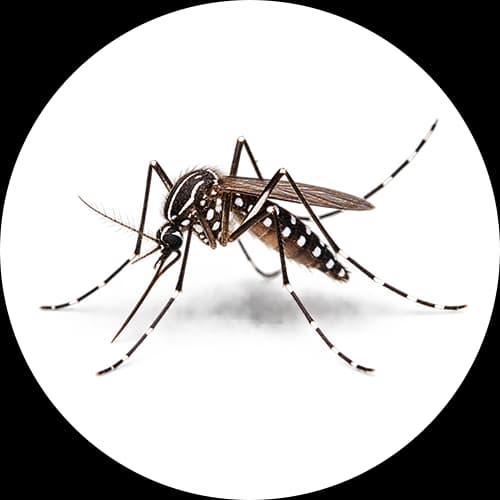
Aedes Mosquito (Genus: Aedes)
Aedes mosquitoes are a group of highly important disease-vector mosquitoes found worldwide, especially in tropical and subtropical regions. They are commonly known as container-breeding mosquitoes because they reproduce in small collections of water found in natural and artificial containers.
Unlike Culex mosquitoes, which are mainly active at night, Aedes mosquitoes are primarily daytime biters, with peak activity occurring during the early morning and late afternoon. They are aggressive human-biting mosquitoes and are responsible for transmitting several major viral diseases, including dengue, chikungunya, Zika virus disease, and yellow fever.
The most important urban species include Aedes aegypti and Aedes albopictus, both of which are highly adapted to human environments.
Identification
Aedes (Diptera: Culicidae)
Key Identification Features
Aedes aegypti (Yellow Fever Mosquito)
Aedes albopictus (Asian Tiger Mosquito)
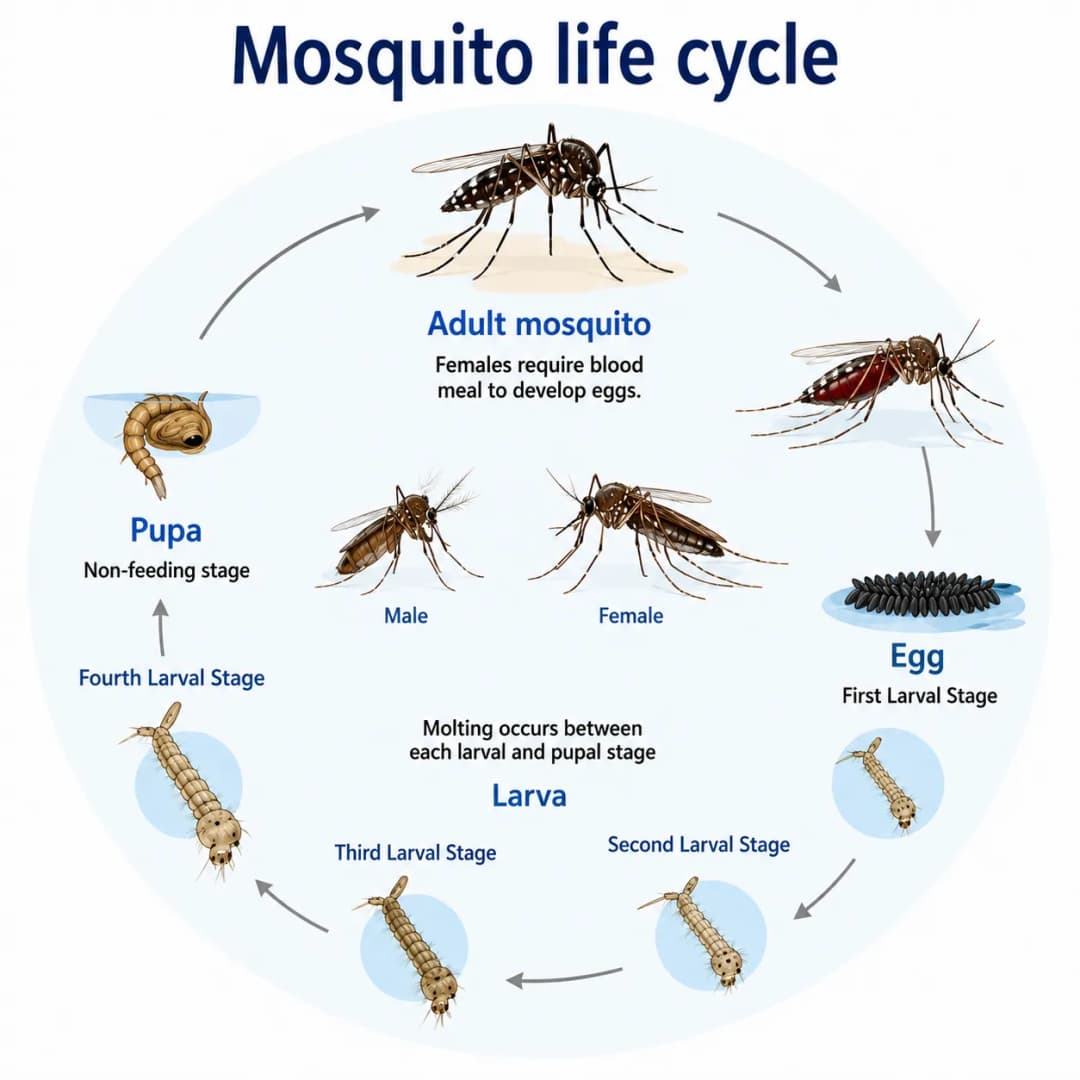
Life Cycle
Aedes mosquitoes undergo complete metamorphosis with four distinct stages:
Egg Stage
Common egg-laying sites include:
Larva Stage
Feeds on:
Organic particles, Microorganisms, Algae, Decaying plant material
Larval development usually takes: 5–10 days under favorable conditions
Pupa Stage
Pupal duration: Approximately 1–3 days
Adult Stage
Adult lifespan: Approximately 2–4 weeks (longer survival is possible under favorable conditions)
Reproduction
Aedes mosquitoes reproduce rapidly in warm and humid environments.
Desiccation-Resistant Eggs
Aedes eggs are laid individually above the water line in artificial containers and can survive drying for several months until rainfall refloods them.
Aedes mosquitoes prefer clean, small collections of water such as flower vases, discarded tires, and plastic buckets.
Feeding Habits
Adult Males
Feed on:
They do not bite humans.
Adult Females
Require blood meals for egg production.
Preferred hosts include:
Feeding characteristics:
• Bite mainly during daylight hours
• Peak activity: Early morning & Late afternoon before sunset
• Often bite indoors and outdoors
Prefer exposed skin areas such as:
Behavior
Primarily daytime-active mosquitoes
Strong preference for human hosts
Excellent urban adaptation
Rest indoors and outdoors in shaded areas
Use visual cues, body heat, carbon dioxide, and skin odors to locate hosts
Females often take multiple small blood meals during their lifetime
Eggs can survive dry conditions for extended periods
Common resting areas include:
Habitat
Aedes mosquitoes are strongly associated with human settlements.
Common breeding sites include:
They prefer small, clean water collections, unlike Culex mosquitoes, which commonly breed in polluted water.
Signs of Aedes Mosquito Activity
Common indicators include:
Daytime mosquito bites
Mosquito activity around homes and gardens
Larvae in water containers
Increased mosquito numbers after rainfall
Presence of small breeding containers around properties
Health Risks
Aedes mosquitoes are among the most important disease vectors globally. They can transmit:
Dengue Fever
One of the most widespread mosquito-borne viral diseases. Causes:
• High fever
• Severe headache
• Muscle and joint pain
• Skin rash
Chikungunya
Causes:
• Fever
• Severe joint pain
• Fatigue
Zika Virus Disease
Usually causes mild symptoms but can pose risks during pregnancy due to possible birth complications.
Yellow Fever
Severe viral disease transmitted by certain Aedes species.
Other Health Effects (Mosquito bites may cause):
Favorable Conditions
Aedes mosquito populations increase with:
Seasonal Activity
Aedes mosquitoes are active throughout the year in warm climates.
Population peaks commonly occur during:
In tropical regions, breeding may continue year-round.
Why Aedes Mosquitoes Are Difficult to Control
Aedes mosquitoes are challenging pests because they:
Successful management requires continuous monitoring and removal of breeding sources.
Distribution
Aedes mosquitoes are found worldwide, especially in:
They are common in:
Comparison: Aedes vs. Culex vs. Anopheles Mosquitoes
| Feature | Aedes Mosquito | Culex Mosquito | Anopheles Mosquito |
|---|---|---|---|
| Common Name | Dengue mosquito / Tiger mosquito | House mosquito | Malaria mosquito |
| Biting Time | Daytime | Night | Night |
| Preferred Breeding Site | Small clean water containers | Polluted stagnant water | Freshwater habitats |
| Egg Type | Individual eggs on container surfaces | Egg rafts on water surface | Individual floating eggs |
| Resting Position | Body angled downward | Body parallel to surface | Body angled upward |
| Major Diseases | Dengue, chikungunya, Zika, yellow fever | Japanese encephalitis, West Nile, filariasis | Malaria |
Common Pest Species
| Common Name | Scientific Name | Distribution |
|---|---|---|
| Yellow Fever Mosquito | Aedes aegypti | Tropical and subtropical regions worldwide |
| Asian Tiger Mosquito | Aedes albopictus | Asia, Europe, Americas, Africa |
| Aedes Mosquito | Aedes polynesiensis | Pacific Islands |
| Aedes Mosquito | Aedes japonicus | Asia, Europe, North America |
Quick Facts
| Feature | Details |
|---|---|
| Common Name | Aedes Mosquito / Dengue Mosquito |
| Scientific Genus | Aedes |
| Order | Diptera |
| Family | Culicidae |
| Diet | Plant nectar (males), blood meals (females) |
| Breeding Sites | Small water-filled containers |
| Development | Egg → Larva → Pupa → Adult |
| Egg Survival | Several months in dry conditions |
| Peak Activity | Early morning and late afternoon |
| Flight Range | Usually 50–200 metres from breeding sites |
| Major Risk | Transmission of dengue, chikungunya, Zika, and yellow fever |
Prevention
Source Reduction
The most effective control method is eliminating breeding sites. Actions include:
Personal Protection
Environmental Management
Specialized Dengue Mosquito Control
Get in touch for anti-larval container treatments, cold misting, and outdoor fogging to eradicate daytime-biting Aedes mosquitoes.
Protect Your Property from Aedes Mosquitoes
Professional, safe, and effective pest management solutions for homes and businesses.