American Cockroach
(Periplaneta americana)
The American cockroach is the largest common structural cockroach and is frequently found in commercial buildings, sewer systems, basements, and utility tunnels. Learn about its identification, life cycle, habitat, feeding habits, behavior, health risks, signs of infestation, and prevention.
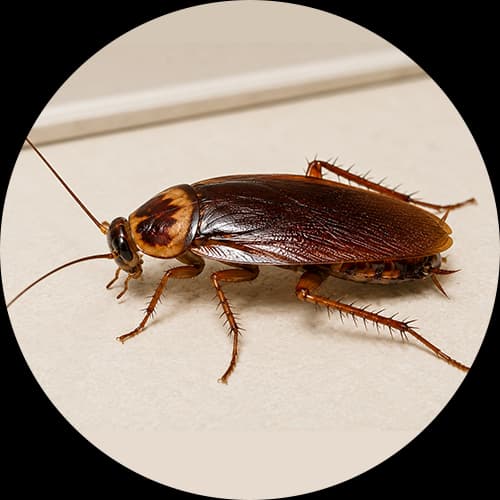
American Cockroach (Periplaneta americana)
The American cockroach is the largest common structural cockroach and is frequently found in commercial buildings, sewer systems, basements, and utility tunnels. Despite its name, it originated in tropical Africa and is now distributed worldwide. It prefers warm, moist environments and can move indoors during extreme weather.
Identification
Periplaneta americana
Distinctive Features:
Pale yellow figure-eight marking behind the head
Long wings extending beyond the abdomen
Capable of gliding or short flights
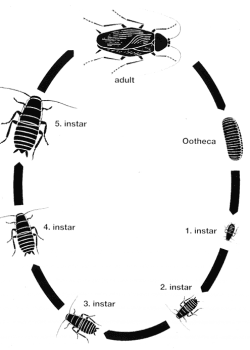
Life Cycle
Egg (Ootheca)
Nymph
Adult
Adult Longevity
Adults live 1–2 years. Population growth is slower than German cockroaches but individuals live much longer.
Female American cockroaches produce 15–20 egg capsules in a lifetime, depositing them in dark, sheltered locations.
Habitat
Preferred environments include:
Sewers
Storm drains
Basements
Boiler rooms
Utility tunnels
Food processing facilities
Warehouses
Garbage rooms
They often enter buildings through:
Feeding Habits
American cockroaches feed on:
Behavior
Mostly nocturnal
Strong runners
May fly short distances in warm temperatures
Frequently migrate from outdoor habitats into buildings
Health Risks
American cockroaches:
Contaminate food preparation areas
Carry disease-causing microorganisms
Spread bacteria mechanically
Produce allergens that contribute to asthma and allergic reactions
Signs of Infestation
Large reddish-brown cockroaches
Capsule-shaped egg cases
Droppings
Musty odor
Shed skins
Cockroaches emerging from drains or basements
Prevention
Seal sewer entry points
Repair drainage issues
Remove standing water
Store garbage in sealed containers
Seal foundation cracks
Maintain clean utility areas
Professional Cockroach Control
Get in touch for specialized American cockroach management, drain treatments, and long-lasting protection.
Protect Your Property from Cockroaches
Professional, safe, and effective pest management solutions for homes and businesses.