Carpet Beetles
(Dermestidae) (Coleoptera: Insecta)
Carpet beetles are destructive stored product and textile pests whose hairy larval stage feeds on wool, silk, leather, feathers, and organic debris. Learn about their identification, complete metamorphosis life cycle, carpet beetle vs clothes moth comparison, and textile preservation.
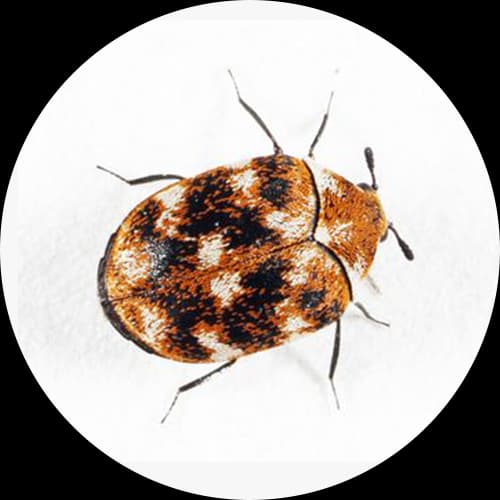
Carpet Beetles (Dermestidae)
Carpet beetles are small, oval-shaped insects belonging to the family Dermestidae within the order Coleoptera (beetles). They are common household and stored-product pests known for the damage caused by their larval stage, which feeds on animal-based materials, natural fibers, and organic debris.
Despite their name, carpet beetles do not primarily live only in carpets. They can infest a wide range of materials including wool, silk, leather, feathers, fur, upholstery, stored textiles, and dead insects.
Carpet beetles are important pest management concerns in:
Common carpet beetle species include:
• Varied carpet beetle (Anthrenus verbasci)
• Furniture carpet beetle (Anthrenus flavipes)
• Black carpet beetle (Attagenus unicolor)
Identification
Dermestidae (Coleoptera: Insecta)
Larval Stage (Main Damage Stage)
The larval stage is responsible for most damage.
Key Identification Features
Life Cycle
Carpet beetles undergo complete metamorphosis: Egg → Larva → Pupa → Adult.
The larval stage may last much longer than the adult stage.
Protected Organic Laying Sites
Common egg-laying areas:
Egg development: Approximately 1–3 weeks depending on conditions
The Destructive Feeding Phase
Common feeding locations:
Larval duration: Several months to over a year depending on species and conditions
Protected Metamorphosis
Pupal period: Several days to weeks
Outdoor Pollen Feeders & Egg Layers
Adult lifespan:
Several weeks
Reproduction
Carpet beetles reproduce by laying eggs near suitable food sources.
Reproductive Characteristics:
Population growth is encouraged by:
Feeding Habits
Larval Feeding
Carpet beetle larvae feed on animal-based materials.
Common food sources:
Adult Feeding
Adult carpet beetles commonly feed on:
Adults usually do not cause fabric damage.
Behavior
Carpet beetles are secretive pests.
Activity Pattern:
• Larvae are active throughout the year indoors
• Adults are often seen near windows
• Larvae prefer dark, undisturbed locations
Common Hiding Locations:
Habitat
Carpet beetles are associated with organic materials.
Indoor Habitats
Common locations:
Commercial Habitats
Frequently found in:
Outdoor Sources
Carpet beetles may enter buildings from:
Signs of Carpet Beetle Activity
Fabric Damage
Common indicators:
• Irregular holes in fabrics
• Damaged wool clothing
• Missing fibers
• Surface thinning
Larval Presence
Signs include:
• Hairy larvae
• Shed larval skins
• Small insect fragments
Adult Beetles
Indicators:
• Small beetles near windows
• Beetles emerging indoors during warm periods
Accumulated Debris
Possible sources:
• Dead insects
• Bird nests
• Animal hair
• Dust buildup
Damage and Nuisance Caused
Textile Damage
Carpet beetles may damage:
• Wool carpets
• Clothing
• Blankets
• Upholstery
• Natural fiber materials
Stored Material Damage
Affected materials include:
• Museum specimens
• Taxidermy items
• Leather products
• Feather products
Commercial Impact
Carpet beetles may affect:
Hotels, Museums, Clothing stores, Textile industries, Warehouses
Concerns include:
• Product damage
• Customer complaints
• Replacement costs
Health Risks
Bites
Carpet beetles:
• Do not bite humans
• Do not feed on blood
Skin Irritation
Some people may experience irritation from:
• Larval hairs | • Shed skins
Possible reactions:
• Itching
• Redness
• Skin irritation
Disease Transmission
Not considered disease vectors
Favorable Conditions
Carpet beetles thrive in:
Common contributing factors:
Seasonal Activity
Carpet beetle activity increases during:
Indoor infestations may continue throughout the year.
Control and Management
Effective carpet beetle management requires an Integrated Pest Management (IPM) approach.
1. Inspection
Identify:
• Infested materials
• Larval activity
• Food sources
• Entry points
2. Source Removal
Remove:
• Damaged fabrics
• Dead insects
• Animal remains
• Infested materials
3. Cleaning
Actions include:
• Thorough vacuuming
• Cleaning cracks and crevices
• Washing fabrics
• Removing debris
4. Storage Management
Practices:
• Use airtight containers
• Maintain clean storage conditions
• Inspect stored textiles regularly
5. Targeted Treatment
May include:
• Crack and crevice treatments
• Localized applications
• Treatment of affected storage areas
Why Carpet Beetles Are Difficult to Control
Carpet beetles are challenging because they:
Distribution
Carpet beetles are found worldwide.
They occur in:
They are especially common where natural fibers and organic materials are stored.
Comparison: Carpet Beetle vs. Clothes Moth
| Feature | Carpet Beetle | Clothes Moth |
|---|---|---|
| Insect Group | Beetle | Moth |
| Damage Stage | Larva | Larva |
| Adult Damage | Usually none | Usually none |
| Feeding | Natural fibers and animal products | Keratin-based fabrics |
| Appearance | Oval beetle | Small flying moth |
Comparison: Carpet Beetle vs. Bed Bug
| Feature | Carpet Beetle | Bed Bug |
|---|---|---|
| Feeding | Fabrics and organic materials | Blood |
| Bites | No | Yes |
| Main Damage | Textile damage | Human bites |
| Adult Movement | Flying/crawling | Crawling |
| Habitat | Carpets, fabrics | Beds and furniture |
Common Fabric and Stored Material Pests
| Common Name | Characteristics |
|---|---|
| Carpet Beetle | Larvae damage natural fibers |
| Clothes Moth | Fabric-feeding larvae |
| Silverfish | Damages paper and starch materials |
| Termite | Damages cellulose-based materials |
| Wood Borer | Tunnels inside timber |
Quick Facts
| Feature | Details |
|---|---|
| Common Name | Carpet Beetle |
| Family | Dermestidae |
| Order | Coleoptera |
| Main Damage Stage | Larva |
| Diet | Wool, fur, feathers, natural fibers |
| Size | 2–5 mm adult |
| Development | Egg → Larva → Pupa → Adult |
| Habitat | Carpets, textiles, storage areas |
| Human Risk | Very low |
| Major Concern | Damage to fabrics and stored materials |
Prevention
Cleaning and Sanitation
Important measures:
Clothing & Fabric Storage
Structural Maintenance
Museum, Wardrobe & Carpet Beetle Protection
Safeguard luxury wool carpets, museum taxidermy specimens, and seasonal wardrobes from destructive bristly larvae with non-staining micro-treatment and pheromone monitoring.
Protect Your Fabrics & Textiles from Carpet Beetles
Professional, safe, and effective fabric pest management solutions for homes, hotels, museums, and textile storage.