Centipedes
(Chilopoda)
Centipedes are fast, nocturnal predatory myriapods with flattened segmented bodies and venomous forcipules that hunt cockroaches, silverfish, and other insects in damp basements and bathrooms. Learn about their identification, life cycle, centipede vs millipede comparison, bite risks, and prevention.
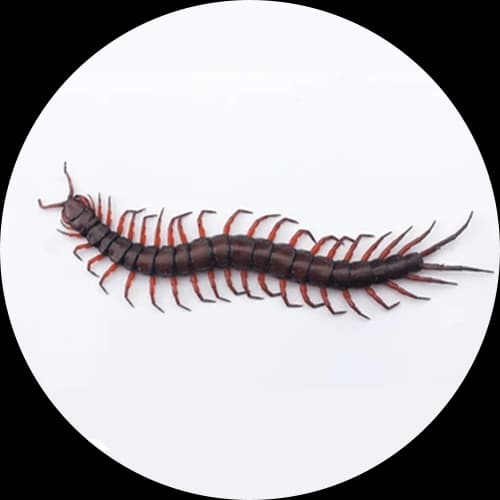
Centipedes (Chilopoda)
Centipedes are elongated, many-legged arthropods belonging to the class Chilopoda. They are active predators that feed on insects and other small invertebrates. Unlike millipedes, which are slow-moving decomposers, centipedes are fast-moving hunters equipped with venomous claws used to capture prey.
Centipedes are commonly found in damp, dark environments such as basements, bathrooms, gardens, soil, leaf litter, and areas with high insect activity. They generally avoid humans but may bite when handled or accidentally disturbed.
In pest management, centipedes are considered occasional nuisance pests. Their presence often indicates moisture problems and the availability of other insects that serve as food sources.
Common centipede groups include:
Identification
Chilopoda (Arthropoda: Myriapoda)
Key Identification Features
Life Cycle
Centipedes undergo gradual development: Egg → Juvenile → Adult.
They do not have larval or pupal stages.
Protected Cluster Deposition
Common egg-laying locations:
Egg development: Several weeks depending on species and conditions
Predatory Segment Addition
Characteristics:
Long-Lived Nocturnal Hunters
Adult lifespan:
Approximately 1–6 years depending on species
Reproduction
Centipedes reproduce sexually.
Reproductive Characteristics:
Breeding is encouraged by:
Feeding Habits
Centipedes are carnivorous predators.
Common Prey Includes:
Hunting Method
Centipedes capture prey using:
They inject venom to immobilize prey before feeding.
Behavior
Centipedes are active hunters with strong survival adaptations.
Activity Pattern:
• Mostly nocturnal
• Hide during daylight hours
• Hunt in dark, damp areas
• Avoid open dry environments
Defensive Behavior:
When disturbed, centipedes may:
• Quickly escape
• Curl their body slightly
• Bite as a defense response
Common Hiding Locations:
Indoor:
- • Bathrooms
- • Basements
- • Crawl spaces
- • Storage rooms
- • Wall voids
- • Under sinks
Outdoor:
- • Soil
- • Rocks
- • Mulch
- • Leaf litter
- • Tree bark
- • Compost areas
Habitat
Centipedes require moisture and shelter.
Residential Areas
Common locations:
Commercial Areas
Frequently found in:
Industrial Areas
Common habitats:
Signs of Centipede Activity
Live Sightings
Indicators include:
• Fast-moving insects near damp areas
• Nighttime sightings
• Centipedes found near drains or storage areas
Shed Skins
Centipedes molt throughout their lives. Signs may include:
• Empty exoskeletons
• Shed skins in hidden locations
Increased Insect Activity
Centipede presence may indicate:
• High insect populations
• Moisture problems
• Suitable hiding conditions
Damage and Nuisance Caused
Centipedes generally do not cause structural damage.
Indoor Nuisance
Problems include:
• Fear and discomfort among occupants
• Unexpected sightings
• Customer complaints
Commercial Concerns
Centipedes may affect: Hotels, Warehouses, Offices, Residential complexes
Concerns include:
• Perception of poor hygiene
• Pest inspection issues
• Occupant complaints
Health Risks
Centipede Bites
Centipedes can bite when:
Handled, Trapped in clothing, Accidentally disturbed
Common symptoms:
Severe Reactions
Large tropical species may cause stronger reactions, including:
• Significant swelling
• Severe pain
• Inflammation
Medical attention may be required in unusual cases.
Venom
Centipede venom is primarily used to:
• Immobilize prey
• Assist feeding
Venom effects vary depending on:
• Species
• Size
• Amount injected
• Individual sensitivity
Favorable Conditions
Centipedes thrive in:
Common contributing factors:
Seasonal Activity
Centipede activity increases during:
Indoor activity may occur year-round where moisture is available.
Control and Management
Effective centipede management requires an Integrated Pest Management (IPM) approach.
1. Inspection
Identify:
• Moisture sources
• Entry points
• Hiding areas
• Insect activity
2. Habitat Modification
Reduce:
• Moisture
• Clutter
• Organic debris
• Outdoor hiding areas
3. Exclusion
Prevent entry by:
• Sealing cracks
• Installing barriers
• Maintaining doors and windows
4. Population Reduction
Methods may include:
• Removal of visible centipedes
• Reduction of insect prey
• Targeted treatments around entry points
• Moisture correction
Why Centipedes Are Difficult to Control
Centipedes can be challenging because they:
Distribution
Centipedes are found worldwide except in extremely cold polar regions. They occur in:
Large tropical species are commonly found in warm, humid regions.
Comparison: Centipede vs. Millipede
| Feature | Centipede | Millipede |
|---|---|---|
| Body Shape | Flattened | Cylindrical or rounded |
| Legs | One pair per segment | Two pairs per segment |
| Movement | Fast | Slow |
| Feeding | Predator | Decomposer |
| Defense | Venomous bite | Chemical secretion |
| Human Risk | Can bite | Generally harmless |
Comparison: Centipede vs. Insect
| Feature | Centipede | Insect |
|---|---|---|
| Body Segments | Many segments | Three main segments |
| Legs | Many pairs | Three pairs |
| Antennae | One pair | One pair |
| Wings | Absent | Often present |
| Example | Centipede | Cockroach, fly |
Common Ground-Dwelling Arthropods Around Buildings
| Common Name | Characteristics |
|---|---|
| Centipede | Fast predator with venom claws |
| Millipede | Slow decomposer with many legs |
| Earwig | Moisture-loving insect with pincers |
| Silverfish | Indoor moisture-associated pest |
| Pill Bug | Crustacean found in damp areas |
Quick Facts
| Feature | Details |
|---|---|
| Common Name | Centipede |
| Scientific Class | Chilopoda |
| Phylum | Arthropoda |
| Diet | Insects and small arthropods |
| Body Structure | Long segmented body |
| Legs | One pair per segment |
| Activity | Mostly nocturnal |
| Habitat | Moist soil, buildings, dark areas |
| Defense | Venomous bite |
| Lifespan | Several months to several years |
| Major Concern | Nuisance presence and occasional bites |
Prevention
Moisture Management
Important prevention steps:
Structural Prevention
Environmental Mgmt
Reduce Food Sources
Since centipedes feed on insects:
Expert Centipede & Crawling Insect Control
Target hidden basements, bathrooms, and foundation perimeters with specialized indoor and outdoor residual treatments, moisture audits, and insect reduction.
Protect Your Property from Centipedes
Professional, safe, and effective pest management solutions for homes and businesses.