Culex Mosquito
(Genus: Culex)
Culex mosquitoes are a widespread group of mosquitoes found throughout the world and are among the most common mosquito pests in urban, rural, and agricultural environments. Learn about their identification, life cycle, breeding habitats, disease transmission, and prevention.
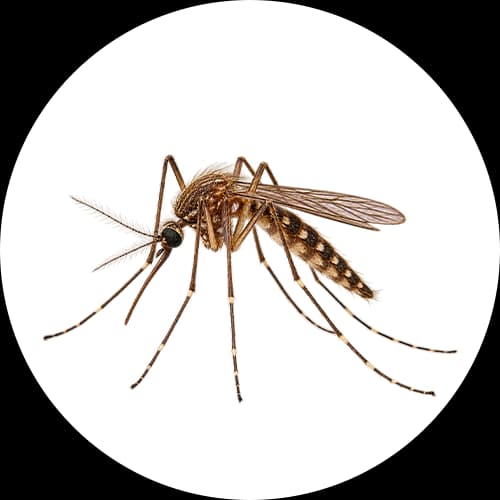
Culex Mosquito (Genus: Culex)
Culex mosquitoes are a widespread group of mosquitoes found throughout the world and are among the most common mosquito pests in urban, rural, and agricultural environments. They are commonly known as house mosquitoes because many species readily enter human dwellings and become active around homes, livestock areas, and public spaces.
Culex mosquitoes breed primarily in stagnant or polluted water sources and are important disease vectors. Depending on the species and geographic location, they can transmit diseases such as West Nile fever, Japanese encephalitis, St. Louis encephalitis, and lymphatic filariasis.
Unlike some mosquito species that primarily bite during the day, Culex mosquitoes are generally night-biting mosquitoes, with peak activity occurring from dusk through dawn.
Identification
Culex (Diptera: Culicidae)
Key Identification Features
Life Cycle
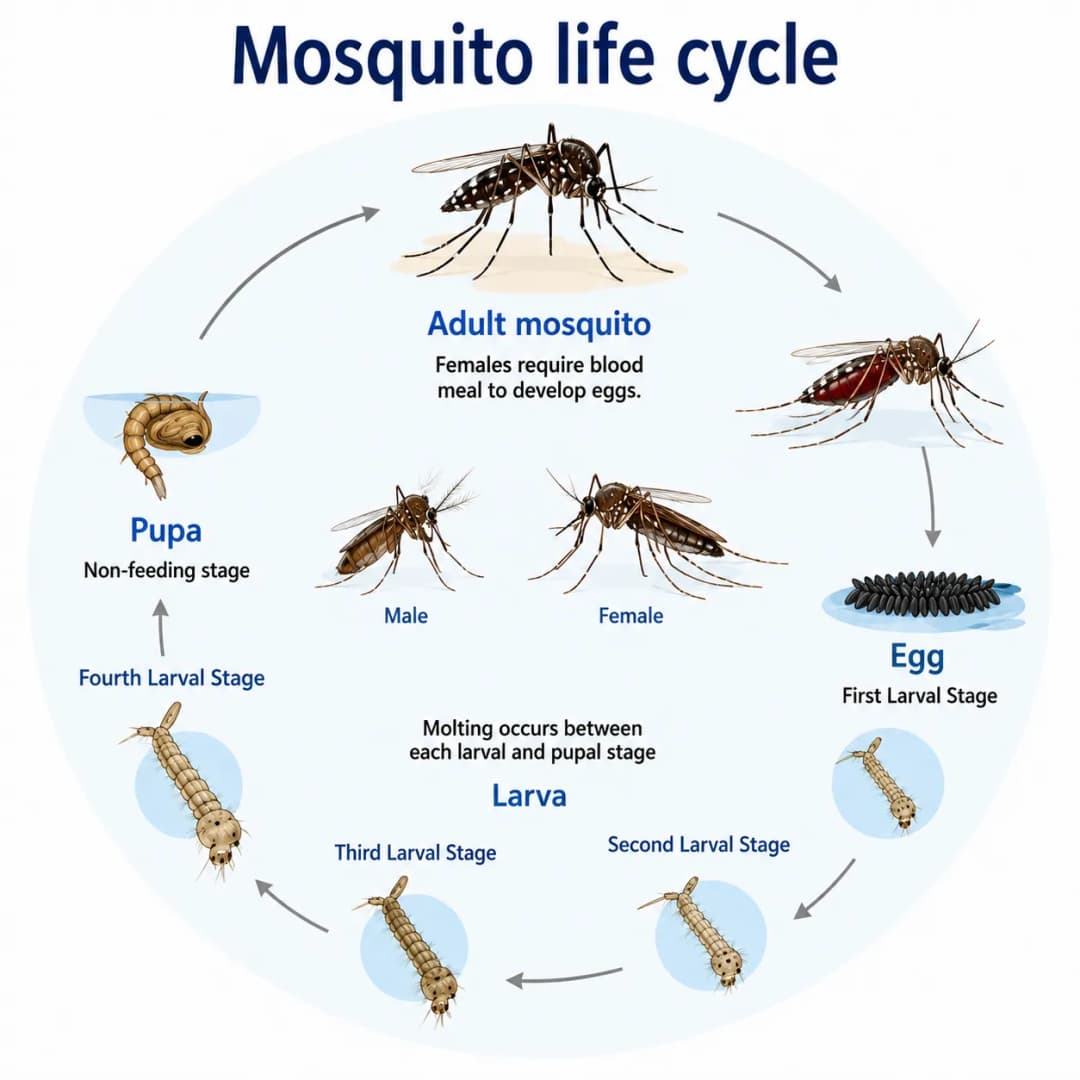
Culex mosquitoes undergo complete metamorphosis with four distinct life stages:
Egg Raft Stage
Common egg-laying sites include:
Larva Stage
Larval development usually takes: 5–14 days, depending on temperature and food availability
Pupa Stage
Pupal stage lasts: Approximately 1–4 days
Adult Stage
Adult lifespan: Males: about 1–2 weeks; Females: several weeks to several months under favorable conditions
Reproduction
Culex mosquitoes reproduce rapidly under suitable environmental conditions.
Egg Rafts & Larval Instars
From 100–300 egg clusters floating on stagnant water surfaces to active air-siphoning wrigglers and mobile pupal tumblers.
Culex mosquitoes tolerate heavily polluted water with high organic content, breeding in sewage and septic systems.
Feeding Habits
Adult Males
Feed on:
They do not bite humans or animals.
Adult Females
Require blood meals for egg production.
Preferred hosts include:
Peak biting activity (night feeders):
• Evening after sunset | • Before sunrise
Behavior
Primarily active at night
Weak to moderate flyers
Rest indoors and outdoors during the day
Attracted to carbon dioxide, body heat, and odors
Females search for blood hosts after mating
Often enter houses through open doors, windows, and ventilation openings
Rest in dark, humid areas such as:
Habitat
Culex mosquitoes prefer stagnant, nutrient-rich water sources.
Common breeding habitats include:
Unlike some mosquitoes, Culex mosquitoes tolerate heavily polluted water with high organic content.
Signs of Culex Mosquito Activity
Common indicators include:
Increased mosquito activity during evening and nighttime
Mosquitoes resting indoors during daylight hours
Larvae visible in stagnant water sources
Mosquito swarms near drains or water bodies
Increased mosquito nuisance around livestock areas
Health Risks
Culex mosquitoes are important disease vectors. Depending on the species, they may transmit:
Japanese Encephalitis (JE)
• Caused by Japanese encephalitis virus
• Commonly associated with rice-growing regions and pig farming areas
West Nile Virus Disease
• Transmitted primarily through bird–mosquito cycles
• Humans and horses may become infected
St. Louis Encephalitis
• Viral disease affecting the nervous system
Lymphatic Filariasis
• Caused by parasitic worms affecting the lymphatic system
• Certain Culex species transmit filarial parasites
Other Health Impacts (Mosquito bites may cause):
Favorable Conditions
Culex mosquitoes thrive in:
Population growth increases rapidly during:
Seasonal Activity
Culex mosquitoes may remain active year-round in warm climates.
Peak activity generally occurs during:
In cooler regions, populations decline during colder months.
Why Culex Mosquitoes Are Difficult to Control
Culex mosquitoes are challenging pests because they:
Effective management requires integrated mosquito control, including breeding-site reduction, monitoring, larval control, and adult mosquito management.
Distribution
Culex mosquitoes are distributed worldwide and occur in:
They are common in:
Comparison: Culex vs. Aedes vs. Anopheles Mosquitoes
| Feature | Culex Mosquito | Aedes Mosquito | Anopheles Mosquito |
|---|---|---|---|
| Common Name | House mosquito | Dengue mosquito | Malaria mosquito |
| Biting Time | Night | Day and early evening | Night |
| Breeding Water | Polluted stagnant water | Clean containers and small water collections | Clean freshwater habitats |
| Resting Position | Body parallel to surface | Body angled downward | Body angled upward |
| Major Diseases | Japanese encephalitis, West Nile, filariasis | Dengue, chikungunya, Zika | Malaria |
| Egg Type | Egg rafts | Individual eggs | Single floating eggs |
Common Pest Species
| Common Name | Scientific Name | Distribution |
|---|---|---|
| Common House Mosquito | Culex pipiens | Europe, Asia, North America, Africa |
| Southern House Mosquito | Culex quinquefasciatus | Tropical and subtropical regions worldwide |
| Japanese Encephalitis Mosquito | Culex tritaeniorhynchus | Asia and Western Pacific regions |
| Culex Mosquito | Culex vishnui complex | South and Southeast Asia |
Quick Facts
| Feature | Details |
|---|---|
| Common Name | Culex Mosquito / House Mosquito |
| Scientific Genus | Culex |
| Order | Diptera |
| Family | Culicidae |
| Diet | Plant nectar (males), blood meals (females) |
| Breeding Sites | Stagnant and polluted water |
| Development | Egg → Larva → Pupa → Adult |
| Egg Production | Hundreds of eggs per female |
| Peak Activity | Dusk to dawn |
| Flight Range | Species dependent; commonly hundreds of metres to several kilometres |
| Major Risk | Disease transmission and mosquito nuisance |
Prevention
Effective Culex mosquito prevention includes:
Source Reduction
Structural Prevention
Environmental Management
Professional Mosquito Management & Thermal Fogging
Get in touch for specialized anti-larval treatments, cold ULV misting, and thermal fogging to eliminate breeding sites and adult mosquitoes.
Protect Your Property from Mosquitoes
Professional, safe, and effective pest management solutions for homes and businesses.