Drain Fly
(Psychodidae spp.)
Drain flies (moth flies / sewer flies) are small moth-like insects breeding in organic drain slime, sewage pipes, and grease traps, indicating plumbing sanitation problems. Learn about their identification, 8–24 day life cycle, drain tape test, fly comparison, and prevention.
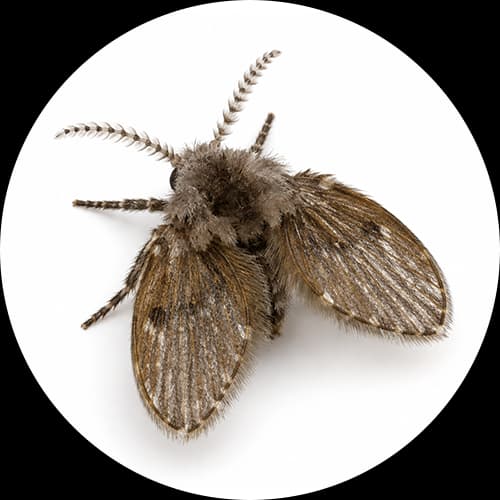
Drain Fly (Psychodidae spp.)
Drain flies, also known as moth flies, sewer flies, or filter flies, are small nuisance flies commonly found in areas with moist organic buildup. They are frequently associated with drains, sewage systems, wastewater areas, grease traps, and plumbing fixtures.
Drain flies do not bite humans and are not considered major disease vectors; however, their presence indicates the availability of organic matter and moisture that can support fly breeding. They are important sanitation pests in homes, restaurants, hotels, hospitals, food processing facilities, and commercial buildings.
The most common pest species belong to the family Psychodidae, particularly:
- • Common Drain Fly (Clogmia albipunctata)
- • Other species of Psychoda and related genera
Identification
Psychodidae (Diptera)
Key Identification Features
Life Cycle
Drain flies undergo complete metamorphosis: Egg → Larva → Pupa → Adult.
The life cycle may be completed in approximately 8–24 days, depending on temperature and environmental conditions.
Moist Organic Deposits
Common egg-laying sites:
Eggs hatch within: Approximately 1–6 days
Aquatic Slime Feeders
Common larval habitats:
Slime Surface Attachment
Weak Flyers Near Drains
Adult lifespan:
Approximately 1–3 weeks
Reproduction
Drain flies reproduce rapidly when moisture and organic buildup are available.
Reproductive Characteristics:
Population growth is encouraged by:
Feeding Habits
Adult drain flies have limited feeding activity.
Larvae obtain nutrients from:
Adult flies may feed on:
Behavior
Drain flies have distinctive habits:
Mostly active during evening and nighttime
Weak flyers
Remain close to breeding sites
Rest on nearby walls and surfaces
Often appear in small numbers around plumbing areas
Common Resting Locations
Habitat
Drain flies require moisture and organic buildup for breeding. Common habitats include:
Residential Areas
Commercial Areas
Industrial Areas
Signs of Drain Fly Infestation
Adult Fly Activity
Common indicators:
• Small fuzzy flies resting near drains
• Flies emerging when drains are disturbed
• Increased activity near plumbing fixtures
Drain Breeding Evidence
Possible signs include:
• Organic slime buildup
• Slow drainage
• Foul odors
• Moist deposits inside pipes
Drain Test Method
A common inspection method:
1. Cover drain openings with clear tape overnight
2. Check for trapped adult flies emerging from the drain
Damage and Nuisance Caused
Drain flies generally do not cause structural damage but create hygiene concerns.
Sanitation Problems
Their presence may indicate:
• Poor drain maintenance
• Organic buildup
• Waste accumulation
• Moisture problems
Business Impact
Drain flies can affect:
Restaurants, Hotels, Food processing facilities, Healthcare facilities
Problems include:
• Customer complaints
• Hygiene concerns
• Pest inspection failures
• Reputation issues
Health Risks
Drain flies are not considered aggressive disease transmitters; however, they may contribute to sanitation concerns. Potential risks include:
Microbial Transfer
Flies developing in sewage or organic waste areas may carry microorganisms on their bodies.
Contamination Concerns
They may transfer contaminants from:
• Drain deposits
• Wastewater areas
• Organic buildup
to nearby surfaces.
Allergy Concerns
In large infestations, body fragments and insect debris may contribute to allergic reactions in sensitive individuals.
Favorable Conditions
Drain flies thrive in:
Common contributing factors:
Seasonal Activity
Drain flies may occur throughout the year indoors.
Outdoor populations often increase during:
Indoor infestations can continue year-round due to:
• Heated buildings
• Constant moisture
• Plumbing systems
Control and Management
Effective drain fly control requires an Integrated Pest Management (IPM) approach.
1. Inspection
Identify:
• Breeding drains
• Plumbing issues
• Organic buildup
• Moisture sources
2. Source Elimination
The primary control method:
• Remove drain slime
• Clean organic deposits
• Improve drainage conditions
• Correct plumbing problems
3. Monitoring
Methods include:
• Adult fly observation
• Drain inspections
• Sticky traps
• Breeding source checks
4. Targeted Treatment
May include:
• Drain cleaning procedures
• Biological or enzymatic drain treatments
• Adult fly reduction measures
• Residual insect management where appropriate
Why Drain Flies Are Difficult to Control
Drain flies are challenging pests because they:
Distribution
Drain flies are found worldwide and occur in:
They are especially common in warm and humid regions.
Comparison: Drain Fly vs. Fruit Fly vs. House Fly
| Feature | Drain Fly | Fruit Fly | House Fly |
|---|---|---|---|
| Scientific Family | Psychodidae | Drosophilidae | Muscidae |
| Size | 1.5–5 mm | 2–4 mm | 6–7 mm |
| Appearance | Hairy, moth-like | Small brown fly with red eyes | Gray fly with stripes |
| Breeding Site | Drains and sewage deposits | Fermenting fruits and liquids | Garbage, manure, waste |
| Flight | Weak fluttering | Short hovering | Strong flying ability |
| Main Concern | Drain sanitation | Food nuisance | Disease contamination |
Common Fly Species Around Buildings
| Common Name | Scientific Name | Characteristics |
|---|---|---|
| Drain Fly | Clogmia albipunctata / Psychodidae spp. | Breeds in drains and organic sludge |
| Fruit Fly | Drosophila melanogaster | Breeds in fermenting food materials |
| House Fly | Musca domestica | Major sanitation pest |
| Blow Fly | Calliphoridae spp. | Associated with decaying organic matter |
Quick Facts
| Feature | Details |
|---|---|
| Common Name | Drain Fly / Moth Fly |
| Scientific Family | Psychodidae |
| Order | Diptera |
| Diet | Organic sludge, microorganisms, decaying matter |
| Activity | Mainly evening and nighttime |
| Breeding Sites | Drains, sewage deposits, wastewater systems |
| Development | Egg → Larva → Pupa → Adult |
| Life Cycle | 8–24 days under favorable conditions |
| Adult Lifespan | 1–3 weeks |
| Flight Ability | Weak fluttering flight |
| Major Risk | Hygiene concerns and drain infestation indication |
Prevention
Drain Maintenance
Most important prevention measures:
Sanitation Management
Structural Prevention
Professional Drain & Plumbing Bio-Cleaning
Eliminate organic slime layers in grease traps, floor drains, and sewer pipes with bio-enzymatic foam treatments, mechanical scouring, and ongoing monitoring.
Protect Your Property from Drain Flies
Professional, safe, and effective pest management solutions for homes and businesses.