Drywood Termites
(Family: Kalotermitidae)
Drywood termites are wood-destroying insects that live entirely within dry, sound wood and do not require contact with soil or external moisture to survive. Learn about their identification, colony structure, life cycle, habitat, signs of infestation, damage, and prevention.
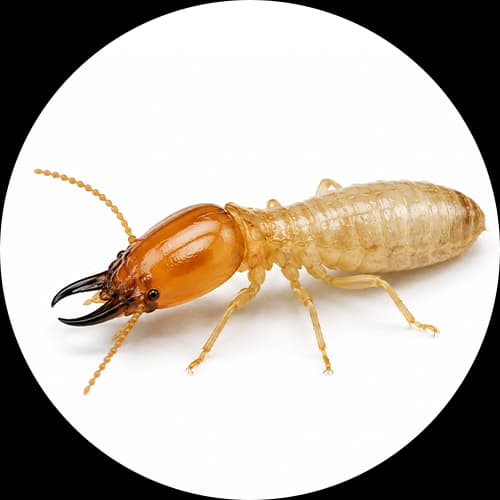
Drywood Termites (Family: Kalotermitidae)
Drywood termites are wood-destroying insects that live entirely within dry, sound wood and do not require contact with soil or external moisture to survive. Unlike subterranean termites, they establish small, self-contained colonies inside wooden structures, furniture, and timber products. Because they excavate galleries deep within wood and often leave the outer surface intact, infestations can remain undetected for years.
Drywood termites are significant structural pests in tropical, subtropical, and coastal regions, where they can cause extensive damage to homes, commercial buildings, furniture, and wooden artifacts.
Identification
Kalotermitidae
Drywood Termite Castes
Worker-like Immatures (Pseudergates)
Unlike subterranean termites, drywood termites do not have a true worker caste. Instead, immature termites called pseudergates perform the duties of workers.
Size: 4–6 mm
Color: Creamy white to pale yellow
Soldier Termites
Size: 5–8 mm
Pale body with a large, dark amber to reddish-brown head
Winged Reproductives (Alates)
Size: 10–15 mm including wings
Light brown to dark brown body
Colony Structure
Drywood termite colonies are smaller than subterranean termite colonies.
Queen
King
Pseudergates
Soldiers
Winged Reproductives
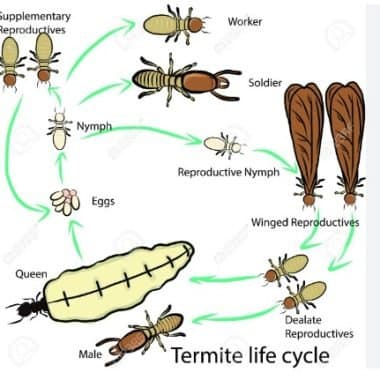
Life Cycle
Drywood termites undergo incomplete metamorphosis.
Egg Stage
Pseudergate Stage
Adult Castes
Most mature colonies contain 1,000–5,000 individuals, although some species may develop larger colonies over time.
Reproduction
Drywood termites reproduce through seasonal swarming.
During suitable weather conditions:
Internal Wood Habitat
Drywood termites establish self-contained colonies entirely inside dry wood, obtaining sufficient moisture from cellulose consumption and metabolic processes.
Colony growth is relatively slow, but internal excavation continues undetected for years until fecal pellets or kick-out holes appear.
Habitat
Drywood termites infest dry, undecayed wood with relatively low moisture content.
Common infestation sites include:
Unlike subterranean termites, drywood termites do not require soil contact.
Feeding Habits
Drywood termites feed exclusively on cellulose found in wood and wood-based products.
Common food sources include:
They obtain sufficient moisture from the wood they consume and from metabolic processes, eliminating the need for contact with damp soil.
Behavior
Live entirely inside wood
Build smooth galleries without soil or mud
Produce characteristic dry fecal pellets (frass)
Avoid light whenever possible
Swarm seasonally to establish new colonies
Cause hidden damage over many years
Signs of Infestation
Common indicators include:
Small piles of hard, dry, pellet-shaped fecal droppings (frass) beneath infested wood
Tiny "kick-out" holes used to expel fecal pellets
Hollow-sounding timber
Blistered or damaged wooden surfaces
Swarms of winged termites
Discarded wings on windowsills or floors
Doors or windows becoming difficult to open or close
Visible galleries inside damaged wood
Unlike subterranean termites, drywood termites do not build mud tubes.
Damage Caused
Drywood termites excavate extensive galleries inside wood while leaving a thin outer surface intact.
Commonly damaged items include:
Long-term infestations can weaken structural components and require costly repairs or replacement.
Favorable Conditions
Drywood termites thrive where:
Unlike subterranean termites, high soil moisture is not required.
Seasonal Activity
Drywood termites remain active year-round inside infested wood.
Swarming generally occurs during:
The exact swarming period depends on species and geographic location.
Why Drywood Termites Are Difficult to Eliminate
Drywood termites present unique control challenges because they:
Distribution
Drywood termites are commonly found in:
They are significant structural pests in:
Comparison: Drywood vs. Subterranean Termites
| Feature | Drywood Termites | Subterranean Termites |
|---|---|---|
| Nest Location | Inside dry wood | Underground in soil |
| Soil Contact | Not required | Essential |
| Moisture Requirement | Low | High |
| Mud Tubes | No | Yes |
| Colony Size | 1,000–5,000 | 100,000–1,000,000+ |
| Fecal Pellets | Dry, six-sided pellets (frass) | Not visible outside galleries |
| Common Damage | Furniture, roof timbers, doors, frames | Structural timber, foundations, flooring |
Common Pest Species
| Common Name | Scientific Name | Distribution |
|---|---|---|
| West Indian Drywood Termite | Cryptotermes brevis | Worldwide in tropical and subtropical regions |
| Western Drywood Termite | Incisitermes minor | Western North America |
| Powderpost Drywood Termite | Cryptotermes cynocephalus | Southeast Asia |
| Indian Drywood Termite | Neotermes bosei | Indian subcontinent |
| Giant Drywood Termite | Neotermes jouteli | North America and the Caribbean |
Quick Facts
| Feature | Details |
|---|---|
| Common Name | Drywood Termites |
| Scientific Family | Kalotermitidae |
| Diet | Cellulose (dry wood and wood-based materials) |
| Colony Size | 1,000–5,000 individuals (typically) |
| Nest Location | Entirely inside dry wood |
| Development | Egg → Pseudergate → Soldier/Reproductive |
| Queen Lifespan | 10–15 years |
| Soil Contact | Not required |
| Distinctive Sign | Dry fecal pellets (frass) and kick-out holes |
| Active Period | Year-round indoors |
| Swarming Season | Late spring to early autumn (varies by species) |
| Major Risk | Hidden damage to structural timber and wooden furniture |
Prevention
Effective prevention measures include:
Inspect wooden furniture before purchase
Examine second-hand furniture and antiques carefully
Seal cracks and joints in wooden structures
Apply protective wood finishes where appropriate
Store timber off the ground and under cover
Replace damaged or infested wood promptly
Conduct regular professional termite inspections
Avoid introducing untreated wood from infested areas
Professional Drywood Termite Inspection & Treatment
Get in touch for specialized localized timber injection, wood preservative treatments, and comprehensive building inspections.
Protect Your Property from Drywood Termites
Professional, safe, and effective pest management solutions for homes and businesses.