House Dust Mites
(Dermatophagoides spp.) (Arachnida: Acari)
House dust mites are microscopic, non-biting arachnids that inhabit household dust, mattresses, pillows, and upholstered furniture to feed on shed skin flakes, producing potent allergens that trigger rhinitis and asthma. Learn about their identification, life cycle, dust mite vs bed bug comparison, and humidity management.
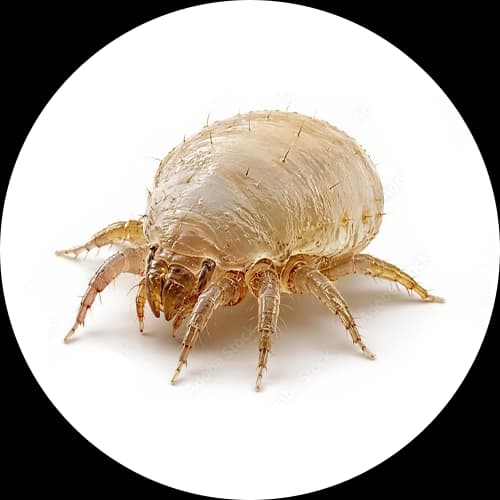
House Dust Mites (Dermatophagoides spp.)
House dust mites are microscopic arthropods belonging to the class Arachnida and the subclass Acari. They are common indoor organisms found in household dust, particularly in warm and humid environments where they feed on shed human and animal skin flakes.
The most common house dust mite species include:
• American house dust mite (Dermatophagoides farinae)
• European house dust mite (Dermatophagoides pteronyssinus)
House dust mites are not visible to the naked eye and do not bite, sting, or live on humans. Their importance in pest management is primarily related to allergens produced from their body fragments and fecal particles, which may trigger allergic reactions and respiratory symptoms in sensitive individuals.
House dust mites are commonly associated with:
Identification
Dermatophagoides spp. (Arachnida: Acari)
Key Identification Features
Life Cycle
House dust mites undergo gradual development: Egg → Larva → Nymph → Adult.
The complete life cycle is influenced strongly by temperature and humidity.
Microscopic Fabric Deposition
Common egg-laying areas:
Egg development: Approximately 1–3 weeks depending on conditions
Six-Legged Organic Feeders
Characteristics:
Eight-Legged Developmental Phases
Characteristics:
Allergen Production & Reproduction
Adult lifespan:
Approximately 1–3 months depending on environmental conditions
Reproduction
House dust mites reproduce rapidly under favorable indoor conditions.
Reproductive Characteristics:
Population growth is encouraged by:
Feeding Habits
House dust mites feed primarily on organic material.
Main Food Sources (They consume):
Feeding Locations (Common feeding areas):
Behavior
House dust mites are adapted to indoor environments.
Activity Pattern:
• Remain hidden within fabrics and dust
• Do not actively travel over large distances
• Populations build up where food and humidity are available
Common Hiding Locations:
Habitat
House dust mites require moisture because they absorb water from the air rather than drinking.
Indoor Habitats
Common locations:
Commercial Habitats
Frequently found in:
Environmental Preferences
Ideal conditions include:
Signs of House Dust Mite Presence
Because mites are microscopic, direct observation is uncommon.
Common Indicators
Possible signs include:
• Dust accumulation
• Allergen-related complaints
• Increased symptoms in humid conditions
• Presence in older mattresses and carpets
Allergy-Related Indicators
Sensitive individuals may experience:
• Sneezing
• Nasal congestion
• Runny nose
• Itchy eyes
• Coughing
• Asthma aggravation
Damage and Nuisance Caused
House dust mites do not damage buildings or household items.
Main Concern: Allergens
They produce allergens from:
These allergens can become airborne when:
• Bedding is disturbed
• Carpets are vacuumed
• Dust is moved
Commercial Concerns
House dust mites may affect:
Hotels, Healthcare facilities, Rental properties, Dormitories
Concerns include:
• Allergy complaints
• Indoor air quality issues
• Guest comfort concerns
Health Risks
Allergic Reactions
House dust mite allergens may trigger:
• Allergic rhinitis
• Sneezing
• Nasal irritation
• Eye irritation
Asthma Association
Exposure may worsen symptoms in people with:
• Asthma
• Dust allergies
• Respiratory sensitivity
Biting and Infestation
House dust mites:
• Do not bite humans
• Do not suck blood
• Do not burrow into skin
• Do not infest the body
Favorable Conditions
House dust mites thrive in:
Common contributing factors:
Seasonal Activity
House dust mite populations may increase during:
Indoor populations may remain active year-round.
Control and Management
Effective dust mite management requires an Integrated Pest Management (IPM) and indoor environmental management approach.
1. Inspection
Assess:
• Humidity levels
• Dust accumulation
• Fabric materials
• Allergy complaint areas
2. Moisture Management
Key control step:
• Reduce humidity
• Improve ventilation
• Correct moisture problems
3. Cleaning & Sanitation
Actions include:
• Regular vacuuming
• Washing bedding
• Removing dust reservoirs
4. Physical Barriers
Methods include:
• Mattress encasements
• Pillow covers
• Reduced fabric accumulation
5. Monitoring
Monitor:
• Indoor humidity
• Dust levels
• High-risk areas
Why House Dust Mites Are Difficult to Control
House dust mites are challenging because they:
Distribution
House dust mites are found worldwide.
They are common in:
They are especially prevalent in warm and humid climates.
Comparison: House Dust Mite vs. Bed Bug
| Feature | House Dust Mite | Bed Bug |
|---|---|---|
| Size | 0.2–0.4 mm | 4–7 mm |
| Visibility | Microscopic | Visible |
| Feeding | Skin flakes | Blood |
| Bites | No | Yes |
| Main Concern | Allergens | Bites and infestation |
Comparison: House Dust Mite vs. Flea
| Feature | House Dust Mite | Flea |
|---|---|---|
| Classification | Arachnid | Insect |
| Legs | Eight | Six |
| Movement | Microscopic crawling | Jumping |
| Feeding | Organic debris | Blood |
| Human Impact | Allergies | Bites |
Common Indoor Allergy-Associated Pests
| Common Name | Characteristics |
|---|---|
| House Dust Mite | Microscopic allergen-producing mite |
| Mold Mite | Associated with fungi and moisture |
| Cockroach | Produces allergenic debris |
| Flea | Causes bites and irritation |
| Carpet Beetle | May contribute to fabric-related allergens |
Quick Facts
| Feature | Details |
|---|---|
| Common Name | House Dust Mite |
| Scientific Group | Dermatophagoides spp. |
| Class | Arachnida |
| Size | 0.2–0.4 mm |
| Diet | Skin flakes and organic debris |
| Legs | Eight |
| Development | Egg → Larva → Nymph → Adult |
| Habitat | Mattresses, carpets, upholstery |
| Human Risk | Allergy-related effects |
| Major Concern | Indoor allergens and air quality |
Prevention
Humidity Control
Most important measure:
Bedding Management
Recommended practices:
Cleaning Practices
Environmental Reduction
Reduce mite-friendly conditions by:
Indoor Air Quality & Deep Mattress Allergen Sanitization
Reduce asthma-triggering mite allergens in mattresses, upholstery, and carpets with HEPA-filtered vacuuming, environmental acaricides, and humidity control.
Protect Your Family from Dust Mite Allergens
Professional, safe, and effective allergen management solutions for homes, hotels, and healthcare facilities.