Fleas
(Siphonaptera) (Insecta: Arthropoda)
Fleas are small, wingless, jumping external parasites that pierce the skin of pets and humans to feed on blood. Learn about their identification, complete metamorphosis life cycle with environmental pupae, flea vs bed bug comparison, and integrated host & environmental management.
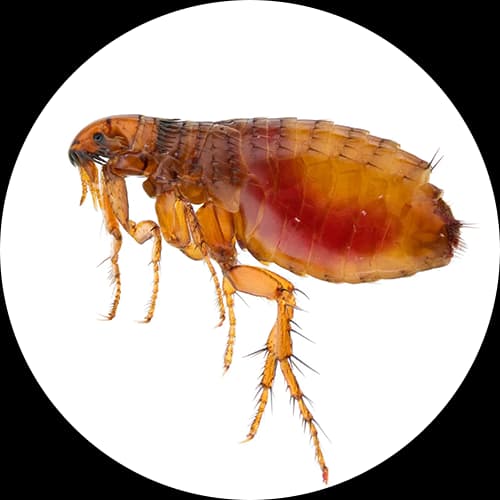
Fleas (Siphonaptera)
Fleas are small, wingless, blood-feeding insects belonging to the order Siphonaptera. They are external parasites that live on mammals and birds and feed by piercing the skin and consuming blood.
Fleas are important pest management concerns because they can infest homes, animal shelters, hotels, warehouses, and commercial facilities where suitable hosts are available. They are commonly associated with pets, rodents, wildlife, and human dwellings.
Flea infestations can cause:
Common flea species include:
• Cat flea (Ctenocephalides felis) – most common domestic flea worldwide
• Dog flea (Ctenocephalides canis)
• Human flea (Pulex irritans)
• Oriental rat flea (Xenopsylla cheopis)
Identification
Siphonaptera (Insecta: Arthropoda)
Key Identification Features
Life Cycle
Fleas undergo complete metamorphosis: Egg → Larva → Pupa → Adult.
The adult flea is the only stage that feeds on blood, while immature stages develop in the environment.
Dozens Laid Daily on Host/Flooring
Eggs are usually found:
Female fleas may lay dozens of eggs per day under favorable conditions
Egg development: Approximately 2 days to 2 weeks
Flea Dirt & Organic Feeder
Larvae feed on:
Common larval habitats:
Carpets, Pet bedding, Floor gaps, Upholstery, Soil near animal resting areas
Larval period: Approximately 5–20 days
Resistant Protective Cocoon
Cocoons are found in:
Pupal stage: Several days to many months depending on conditions
Host Detection & Blood Meal
Adult lifespan:
Several weeks to several months depending on access to hosts
Reproduction
Fleas reproduce rapidly when suitable hosts are available.
Reproductive Characteristics:
Population growth increases with:
Feeding Habits
Adult fleas are blood feeders.
Common Hosts:
Feeding Behavior:
Fleas:
• Jump onto hosts
• Bite and consume blood
• Remain attached or move through hair/fur
• May feed multiple times daily
Behavior
Fleas are highly adapted for parasitic living.
Activity Pattern:
• Active throughout the day and night
• Respond to host movement
• Remain hidden in carpets and fabrics when not feeding
Jumping Ability:
Fleas are among the strongest jumpers relative to body size.
They can:
• Jump many times their body length
• Quickly move between hosts
Common Hiding Locations
Residential
Commercial
Outdoor
Signs of Flea Activity
Flea Bites
Common indicators:
• Small red itchy spots
• Multiple bites in clusters
• Bites commonly around ankles and lower legs
Flea Dirt
One of the most common signs.
Appearance:
• Small black or reddish-brown specks
• Found on pet bedding or animal fur
Live Fleas
Indicators:
• Small jumping insects
• Fleas seen on pets or fabrics
Pet Symptoms
Signs include:
• Excessive scratching
• Biting at fur
• Restlessness
• Hair loss
• Skin irritation
Damage and Nuisance Caused
Human Discomfort
Fleas can cause:
• Itching
• Skin irritation
• Allergic reactions
• Sleep disturbance
Pet Health Concerns
Flea infestations may cause:
• Flea allergy dermatitis
• Skin inflammation
• Hair loss
• Stress and discomfort
Heavy infestations may contribute to:
Anemia, especially in young animals
Commercial Concerns
Fleas may affect:
Hotels, Animal boarding facilities, Veterinary clinics, Residential complexes
Issues include:
• Customer complaints
• Reputation concerns
• Difficult-to-control infestations
Health Risks
Skin Reactions
Flea bites may cause:
• Redness
• Swelling
• Severe itching
• Allergic dermatitis
Disease Transmission
Certain flea species can transmit pathogens.
Historically significant examples include:
Oriental rat flea (Xenopsylla cheopis) associated with transmission of plague bacteria (Yersinia pestis)
Other flea-associated pathogens may vary by region and species.
Tapeworm Transmission
Fleas can serve as intermediate hosts for certain tapeworms, such as:
Dipylidium caninum
Pets may become infected by ingesting infected fleas.
Favorable Conditions
Fleas thrive in:
Common contributing factors:
Seasonal Activity
Flea activity increases during:
Indoor infestations may continue year-round due to stable temperature conditions.
Control and Management
Effective flea management requires an Integrated Pest Management (IPM) approach.
1. Inspection
Identify:
• Flea species
• Host animals
• Infested areas
• Environmental conditions
2. Host Treatment
Important step:
• Treat pets and animals through appropriate veterinary guidance
• Address all affected hosts
3. Environmental Treatment
Target immature stages (Eggs, Larvae, Pupae):
• Carpets
• Bedding
• Furniture
• Floor cracks
4. Sanitation and Cleaning
Actions include:
• Vacuuming frequently
• Washing fabrics
• Removing debris
• Cleaning animal resting areas
5. Monitoring
Methods include:
• Flea traps
• Visual inspections
• Pet checks
• Follow-up evaluations
Why Fleas Are Difficult to Control
Fleas are challenging because they:
Distribution
Fleas are found worldwide. They occur in:
They are especially common where animals and suitable environmental conditions are present.
Comparison: Flea vs. Louse
| Feature | Flea | Louse |
|---|---|---|
| Movement | Jumps | Crawls |
| Wings | Absent | Absent |
| Body Shape | Side-flattened | Flattened top-to-bottom |
| Host Range | Many mammals and birds | Usually host-specific |
| Habitat | Environment + host | Mainly on host |
Comparison: Flea vs. Bed Bug
| Feature | Flea | Bed Bug |
|---|---|---|
| Size | 1.5–3.5 mm | 4–7 mm |
| Movement | Jumps | Crawls |
| Host Contact | Often animals | Mainly humans |
| Body Shape | Narrow side profile | Flat oval body |
| Main Habitat | Pets, carpets, bedding | Beds and furniture |
Common Animal-Associated Pests
| Common Name | Characteristics |
|---|---|
| Flea | Jumping blood-feeding parasite |
| Tick | External parasite related to mites |
| Louse | Host-specific crawling parasite |
| Mite | Microscopic arthropod parasite |
| Bed Bug | Human blood-feeding insect |
Quick Facts
| Feature | Details |
|---|---|
| Common Name | Flea |
| Scientific Order | Siphonaptera |
| Diet | Blood from animals and humans |
| Size | 1.5–3.5 mm |
| Development | Egg → Larva → Pupa → Adult |
| Wings | Absent |
| Movement | Powerful jumping |
| Habitat | Pets, carpets, bedding, soil |
| Lifespan | Weeks to months |
| Major Concern | Bites, allergies, infestation of pets and buildings |
Prevention
Pet Management
Important measures:
Environmental Mgmt
Rodent & Wildlife Control
Reduce flea sources by:
Dual Environmental Flea Eradication & Host Protection
Eliminate biting fleas from carpets, upholstery, and pet resting zones with targeted insect growth regulators (IGR) and residual sprays combined with veterinary pet care.
Protect Your Pets & Property from Fleas
Professional, safe, and effective pest management solutions for homes and commercial facilities.