Flesh Fly
(Sarcophagidae spp.)
Flesh flies are 8–14 mm robust flies characterized by 3 dark thoracic stripes and a checkered abdomen that deposit live larvae directly onto decaying organic matter and meat waste. Learn about their identification, larviposition life cycle, fly comparison, and prevention.
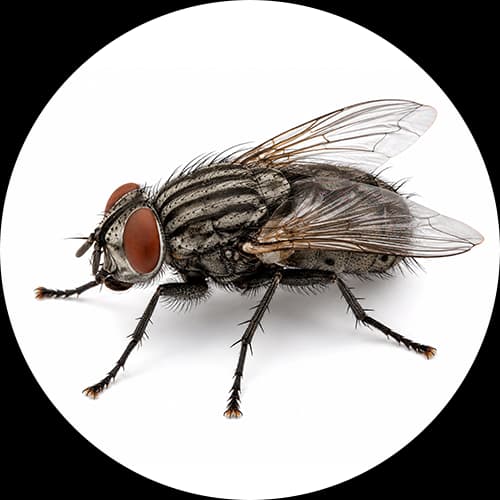
Flesh Fly (Sarcophagidae spp.)
Flesh flies are medium-sized flies belonging to the family Sarcophagidae and are commonly associated with decaying animal matter, meat products, garbage, animal waste, and dead organisms. They are named “flesh flies” because many species develop in decomposing animal tissues.
Unlike house flies, flesh flies generally do not lay eggs. Instead, females deposit live larvae (maggots) directly onto suitable breeding materials, allowing larvae to begin feeding immediately.
Flesh flies are considered important sanitation pests because they may contaminate food, spread microorganisms, and indicate the presence of decaying organic material. They are commonly encountered around restaurants, slaughterhouses, waste disposal areas, farms, and residential properties.
Identification
Sarcophagidae (Diptera)
Key Identification Features
Life Cycle
Flesh flies undergo complete metamorphosis: Larva (Maggot) → Pupa → Adult.
Unlike most flies, flesh flies usually skip the egg stage by depositing live larvae.
Live Larvae Deposition
Common larval habitats:
Larval development: Approximately 3–10 days depending on temperature and food availability
Drier Ground Pupation
Common pupation locations:
Pupal duration: Approximately 7–14 days
Rapid Mating & Emergence
Adult lifespan: Approximately 2–4 weeks
Reproduction
Flesh flies have a unique reproductive strategy.
Reproductive Characteristics:
Advantages of Live Larval Development:
Feeding Habits
Adult flesh flies feed mainly on liquid substances.
Common food sources:
Larvae feed on:
Behavior
Flesh flies are active and strong fliers. Characteristics:
Mainly active during daylight hours
Strong flying ability
Attracted to odors from decaying materials
Frequently rest on sunny surfaces
Search actively for breeding sources
Common Resting Locations
Habitat
Flesh flies are associated with decaying organic materials. Common habitats include:
Residential Areas
Commercial Areas
Agricultural Areas
Signs of Flesh Fly Infestation
Adult Fly Activity
Signs include:
• Large gray flies around waste areas
• Flies near meat or garbage
• Increased fly activity outdoors
Maggot Presence
Larvae may be found in:
• Animal remains
• Garbage
• Meat waste
• Organic debris
Odor Problems
Strong odors may indicate:
• Decaying material
• Hidden carcasses
• Organic waste accumulation
Damage and Nuisance Caused
Food Contamination
Flesh flies may contaminate:
Contamination occurs through:
• Body contact
• Regurgitation
• Fecal deposits
• Microorganisms carried on their bodies
Commercial Impact
Flesh flies can affect:
Meat processing facilities, Restaurants, Food storage areas, Hospitality businesses
Problems include:
• Customer complaints
• Hygiene concerns
• Inspection failures
• Loss of reputation
Health Risks
Flesh flies are considered sanitation pests because they can transport microorganisms. Potential risks include:
Bacterial Contamination
They may carry organisms associated with:
• Food spoilage
• Gastrointestinal illness
• Environmental contamination
Foodborne Illness Concerns
Transmission may occur when flies move between:
• Decaying materials
• Animal waste
• Human food areas
Parasite Transmission
Some flesh fly species may be associated with:
• Parasite eggs
• Disease-causing organisms
Favorable Conditions
Flesh flies thrive where there is:
High-risk locations include:
Seasonal Activity
Flesh fly activity increases during:
In tropical and warm climates, activity may continue throughout much of the year.
Control and Management
Effective flesh fly management requires an Integrated Pest Management (IPM) approach.
1. Inspection
Identify:
• Breeding materials
• Waste sources
• Entry points
• Fly resting locations
2. Source Elimination
Remove:
• Decaying animal matter
• Garbage buildup
• Meat waste
• Organic breeding materials
3. Monitoring
Methods include:
• Fly traps
• Visual inspections
• Fly activity monitoring
• Waste area inspections
4. Targeted Control
May include:
• Sanitation improvement
• Larval source management
• Adult fly reduction methods
• Exclusion practices
Why Flesh Flies Are Difficult to Control
Flesh flies can be challenging because they:
Distribution
Flesh flies are found worldwide and occur in:
They are especially common in warm and humid regions.
Comparison: Flesh Fly vs. House Fly vs. Blow Fly
| Feature | Flesh Fly | House Fly | Blow Fly |
|---|---|---|---|
| Family | Sarcophagidae | Muscidae | Calliphoridae |
| Size | 8–14 mm | 6–7 mm | 8–14 mm |
| Color | Gray with checkered abdomen | Gray with thoracic stripes | Metallic blue/green/black |
| Breeding Material | Decaying flesh and animal waste | Garbage and manure | Carcasses and meat waste |
| Reproduction | Live larvae deposited | Eggs laid | Eggs laid |
| Main Concern | Meat contamination and sanitation | Disease transmission | Decomposition-related contamination |
Common Fly Species Around Buildings
| Common Name | Scientific Group | Characteristics |
|---|---|---|
| Flesh Fly | Sarcophagidae spp. | Develops in decaying animal matter |
| House Fly | Musca domestica | Major sanitation pest |
| Blow Fly | Calliphoridae spp. | Associated with carcasses and meat |
| Fruit Fly | Drosophila spp. | Breeds in fermenting materials |
| Drain Fly | Psychodidae spp. | Breeds in drains and sludge |
Quick Facts
| Feature | Details |
|---|---|
| Common Name | Flesh Fly |
| Scientific Family | Sarcophagidae |
| Order | Diptera |
| Diet | Decaying animal matter, organic fluids |
| Activity | Mainly daytime |
| Breeding Sites | Meat waste, carcasses, animal waste |
| Development | Larva → Pupa → Adult |
| Reproduction | Live larvae deposited by female |
| Life Cycle | Approximately 2–4 weeks depending on conditions |
| Adult Lifespan | 2–4 weeks |
| Major Risk | Food contamination and sanitation concerns |
Prevention
Sanitation Management
The most important prevention measures:
Structural Prevention
Environmental Management
Meat Market & Facility Fly Management
Protect food processing and meat handling environments with professional carcass detection, fly light traps, and sanitary perimeter audits.
Protect Your Property from Flesh Flies
Professional, safe, and effective pest management solutions for homes and businesses.