Fruit Fly
(Drosophila spp.)
Fruit flies (vinegar flies) are small 2–4 mm insects attracted to fermenting organic materials, fruit residues, and drain slime, causing food contamination and hygiene concerns. Learn about their identification, 8–10 day life cycle, feeding habits, fly comparison, and prevention.
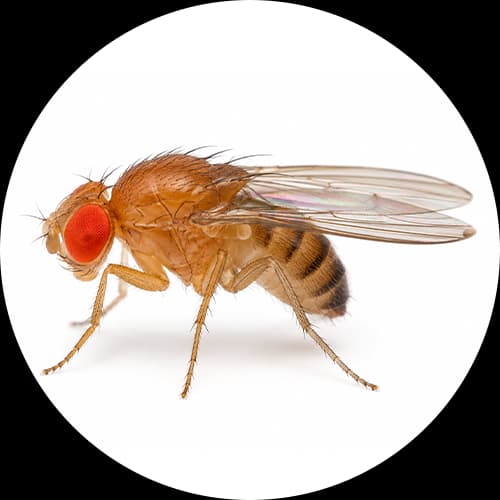
Fruit Fly (Drosophila spp.)
Fruit flies are small flying insects commonly associated with ripening, fermenting, and decaying organic materials. They are among the most common nuisance pests found in homes, restaurants, food processing facilities, supermarkets, bars, hotels, and commercial kitchens.
The most common pest species is the Common Fruit Fly (Drosophila melanogaster), also known as the vinegar fly. Fruit flies are attracted to the odors produced during fermentation and can quickly multiply when suitable breeding materials are available.
Although fruit flies do not bite humans, they are considered hygiene pests because they can contaminate food, spread microorganisms, and indicate poor sanitation or hidden organic waste sources.
Identification
Drosophila (Diptera: Drosophilidae)
Key Identification Features
Life Cycle
Fruit flies undergo complete metamorphosis: Egg → Larva → Pupa → Adult.
Under favorable conditions, the entire life cycle can be completed in approximately 8–10 days.
Moist Organic Materials
Common egg-laying sites:
Eggs hatch within: Approximately 12–24 hours
Microorganism Feeding
Common larval habitats:
Protective Puparium
Rapid Breeding Emergence
Adult lifespan:
Approximately 2–4 weeks
Reproduction
Fruit flies have extremely rapid reproductive capability.
Reproductive Characteristics:
Population growth increases rapidly when:
Feeding Habits
Fruit flies feed on liquids and microorganisms associated with fermentation.
Common food sources include:
They feed primarily on:
Behavior
Fruit flies are highly attracted to fermentation odors. Characteristics:
Active mainly during daytime
Weak but rapid flyers
Hover around food sources
Congregate near breeding areas
Capable of detecting odors from long distances
Common Resting Areas
Habitat
Fruit flies are closely associated with moist organic materials. Common habitats include:
Residential Areas
Commercial Areas
Industrial Areas
Signs of Fruit Fly Infestation
Adult Fly Activity
Common signs:
• Small flies hovering around fruits
• Flies near sinks and drains
• Concentration around beverages
Breeding Source Indicators
Possible sources include:
• Overripe fruits
• Vegetable waste
• Garbage containers
• Sticky food residues
• Drain slime
• Fermented liquids
Drain Activity
Fruit flies may emerge from:
• Kitchen drains
• Floor drains
• Waste pipes
• Food processing drains
Damage and Nuisance Caused
Food Contamination
Fruit flies may contaminate:
Contamination occurs through:
• Body contact
• Leg contact
• Microorganisms carried on their bodies
Commercial Impact
Fruit flies can affect:
Restaurants, Hotels, Food businesses, Beverage facilities
Problems include:
• Customer complaints
• Hygiene concerns
• Regulatory issues
• Loss of reputation
Health Risks
Fruit flies are not major disease vectors like house flies, but they may contribute to contamination. Potential concerns include:
Microbial Contamination
Fruit flies may carry:
• Bacteria
• Yeasts
• Fungi
• Other microorganisms
Food Spoilage
They may accelerate spoilage by transferring microorganisms onto food products.
Favorable Conditions
Fruit flies thrive in:
Common attractants include:
Seasonal Activity
Fruit fly activity increases during:
In warm climates and indoor environments, infestations can occur throughout the year.
Control and Management
Effective fruit fly control requires an Integrated Pest Management (IPM) approach.
1. Inspection
Identify:
• Breeding sources
• Food attractants
• Drain activity
• Moist organic residues
2. Source Elimination
Remove:
• Fermenting materials
• Organic waste
• Food residues
• Hidden breeding sites
3. Monitoring
Methods include:
• Fruit fly traps
• Sticky traps
• Visual inspections
• Activity monitoring
4. Targeted Treatment
May include:
• Adult fly reduction
• Breeding source treatment
• Drain sanitation
• Residual insect management
Why Fruit Flies Are Difficult to Control
Fruit flies are challenging pests because they:
Distribution
Fruit flies are found worldwide and are common in:
They are especially common in warm and humid regions.
Comparison: Fruit Fly vs. House Fly vs. Drain Fly
| Feature | Fruit Fly | House Fly | Drain Fly |
|---|---|---|---|
| Scientific Group | Drosophila spp. | Musca domestica | Psychodidae |
| Size | 2–4 mm | 6–7 mm | 2–5 mm |
| Appearance | Small brown body, red eyes | Gray body with stripes | Hairy, moth-like wings |
| Breeding Site | Fermenting fruits and liquids | Garbage, manure, waste | Organic drain slime |
| Flight | Short hovering flights | Strong flyer | Weak fluttering flight |
| Main Concern | Food nuisance and contamination | Disease transmission | Drain sanitation issues |
Common Fly Species Around Buildings
| Common Name | Scientific Name | Characteristics |
|---|---|---|
| Fruit Fly | Drosophila melanogaster | Breeds in fermenting food materials |
| House Fly | Musca domestica | Major sanitation pest |
| Drain Fly | Psychodidae spp. | Breeds in organic drain deposits |
| Blow Fly | Calliphoridae spp. | Associated with meat and decay |
Quick Facts
| Feature | Details |
|---|---|
| Common Name | Fruit Fly / Vinegar Fly |
| Scientific Name | Drosophila melanogaster |
| Order | Diptera |
| Family | Drosophilidae |
| Diet | Fermented fruits, sugary liquids, microorganisms |
| Activity | Mainly daytime |
| Breeding Sites | Fruits, drains, food residues, organic waste |
| Development | Egg → Larva → Pupa → Adult |
| Egg Production | Up to 400–500 eggs per female |
| Life Cycle | 8–10 days under favorable conditions |
| Lifespan | 2–4 weeks |
| Major Risk | Food contamination and hygiene complaints |
Prevention
Sanitation Management
The most important control measure:
Drain Management
Structural Prevention
Commercial Kitchen & Fruit Fly Control
Eliminate breeding sites in bars, commercial kitchens, and food processing units with bio-enzymatic drain cleaners, sticky traps, and sanitation audits.
Protect Your Property from Fruit Flies
Professional, safe, and effective pest management solutions for homes and businesses.