Honey Bee
(Apis spp.)
Honey bees are beneficial social pollinators constructing wax honeycombs in wall voids, roof cavities, and chimneys that present stinging and honey-leakage risks when nesting indoors. Learn about their identification, colony castes, life cycle, bee vs wasp comparison, and live relocation.
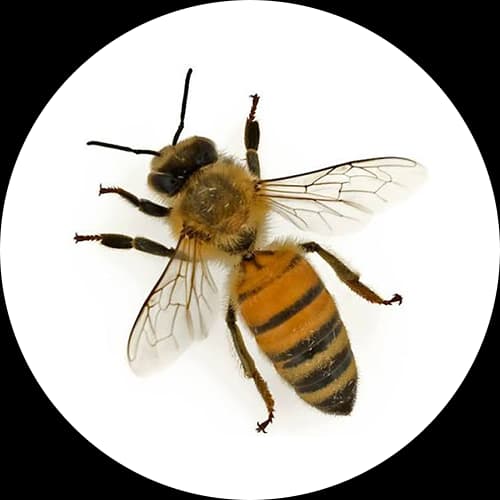
Honey Bee (Apis spp.)
Honey bees are social flying insects belonging to the family Apidae and genus Apis. They are well known for their role in pollination and honey production and are considered highly beneficial insects in agriculture and ecosystems.
In pest management, honey bees are usually not classified as destructive pests; however, they may become a concern when colonies establish inside or near buildings, creating safety risks, structural concerns, and potential conflicts with occupants.
Honey bee colonies may form swarms during colony expansion periods and may establish nests in wall cavities, roof spaces, chimneys, trees, utility boxes, and other protected locations.
Common honey bee species include:
- • Western Honey Bee (Apis mellifera)
- • Asian Honey Bee (Apis cerana)
Identification
Apis spp. (Hymenoptera: Apidae)
Key Identification Features
Honey Bee Colony Structure
Honey bees live in highly organized social colonies consisting of three castes:
Primary Reproductive Individual
Non-Reproductive Females
Worker lifespan: Approximately 4–6 weeks during active seasons
Male Reproductive Caste
Life Cycle
Honey bees undergo complete metamorphosis: Egg → Larva → Pupa → Adult.
Wax Cell Placement
• Queen lays eggs inside wax cells
• Eggs are approximately 1–2 mm long
Egg duration: Approximately 3 days
Worker-Fed White Larvae
• Larvae are white, legless, and worm-like
• Fed by worker bees
Larval period: Approximately 5–6 days
Capped Wax Cell Development
• Cell is sealed with wax
• Bee develops inside the capped cell
Pupal period: Approximately 12 days
Total Development Times
• Queen: Approximately 16 days
• Worker: Approximately 21 days
• Drone: Approximately 24 days
Reproduction
Honey bee reproduction occurs through Colony Reproduction (Swarming) and Egg Production.
Colony Reproduction (Swarming)
Swarming occurs when:
• Colony becomes overcrowded
• A new queen develops
• Part of the colony leaves with the old queen
A swarm may contain:
Swarming bees are usually searching for a new nesting location.
Egg Production
A queen may lay:
Hundreds to thousands of eggs per day
during peak periods
Feeding Habits
Honey bees feed on plant resources.
Main Food Sources:
Nectar:
Used for: Honey production, Energy supply
Pollen:
Used as: Protein source, Food for developing larvae
Behavior
Honey bees display complex social behavior.
Activity Pattern:
• Mainly active during daylight hours
• Forage during warm weather
• Return repeatedly to established food sources
Communication:
• Chemical signals (pheromones)
• Waggle dance to indicate food locations
Defensive Behavior:
Honey bees defend their colony when:
• Hive is disturbed
• Nest is threatened
• Occupants approach too closely
Workers may sting as a defense response.
Habitat
Honey bees naturally nest in protected cavities. Common nesting locations include:
Natural Locations
Common natural sites:
Residential Areas
Common building locations:
Commercial Areas
Possible nesting locations:
Signs of Honey Bee Activity
Bee Swarms
Signs include:
• Large cluster of bees hanging on trees, walls, or structures
• Increased bee activity around a location
Flight Activity
Indicators:
• Regular bee movement through a specific opening
• Bees entering and exiting cracks or cavities
Honeycomb Presence
Possible signs:
• Wax comb inside wall voids
• Honey leakage
• Sweet odor near nesting areas
Honey Stains
May appear as:
• Dark stains on walls or ceilings
• Sticky residues from leaking honey
Damage and Nuisance Caused
Honey bees usually do not damage structures directly, but colonies inside buildings may create problems.
Structural Concerns
Potential issues include:
• Wax comb accumulation
• Honey leakage
• Moisture damage
• Attraction of secondary pests
Occupant Concerns
Problems may include:
• Fear of stings
• Restrictions around entrances
• Customer complaints
• Workplace safety concerns
Secondary Pest Attraction
Abandoned honey and comb may attract:
Health Risks
Bee Stings
Honey bee stings may cause:
Allergic Reactions
Some individuals may experience severe reactions, including:
• Difficulty breathing
• Facial swelling
• Dizziness
• Anaphylaxis
Emergency medical attention may be required for severe allergic reactions.
Favorable Conditions
Honey bees are attracted to:
Building-related infestations are encouraged by:
Seasonal Activity
Honey bee activity increases during:
Swarming commonly occurs when:
• Colonies grow rapidly
• Food resources are abundant
• New colonies are formed
In tropical climates, activity may continue throughout the year.
Control and Management
Effective honey bee management requires an Integrated Pest Management (IPM) approach.
1. Inspection
Identify:
• Bee species
• Nest location
• Colony size
• Entry points
• Risk level
2. Bee Removal and Relocation
Where possible:
• Live colony removal and relocation is preferred
• Professional handling is recommended
• This helps preserve beneficial pollinator populations while resolving safety concerns
3. Exclusion
Prevent future nesting by:
• Sealing cavities
• Repairing openings
• Maintaining building structures
4. Monitoring
Methods include:
• Regular inspections
• Activity observation
• Checking previous nesting sites
Why Honey Bees Are Difficult to Manage
Honey bee colonies can be challenging because they:
Distribution
Honey bees are found worldwide and are commonly associated with:
They are especially common where flowering plants are abundant.
Comparison: Honey Bee vs. Wasp vs. Bumble Bee
| Feature | Honey Bee | Wasp | Bumble Bee |
|---|---|---|---|
| Body | Hairy, rounded | Smooth, narrow waist | Large and very hairy |
| Main Food | Nectar and pollen | Insects, sugars, nectar | Nectar and pollen |
| Colony | Large social colony | Social or solitary | Smaller colonies |
| Sting | Usually one sting (barbed) | Multiple stings possible | Multiple stings possible |
| Nest | Wax comb | Paper/mud structures | Ground or cavity nests |
| Benefit | Major pollinator | Predator and pollinator | Important pollinator |
Common Stinging Insects Around Buildings
| Common Name | Scientific Group | Characteristics |
|---|---|---|
| Honey Bee | Apis spp. | Social pollinator producing honey |
| Wasp | Vespidae spp. | Aggressive nest-defending insect |
| Hornet | Vespa spp. | Large social wasp |
| Bumble Bee | Bombus spp. | Large hairy pollinator |
| Carpenter Bee | Xylocopa spp. | Wood-boring bee |
Quick Facts
| Feature | Details |
|---|---|
| Common Name | Honey Bee |
| Scientific Name | Apis spp. |
| Order | Hymenoptera |
| Family | Apidae |
| Diet | Nectar and pollen |
| Development | Egg → Larva → Pupa → Adult |
| Colony Structure | Queen, workers, drones |
| Nest Material | Wax comb |
| Activity | Mainly daytime |
| Lifespan | Weeks for workers; years for queens |
| Major Concern | Stings, indoor nesting, honey leakage |
Prevention
Structural Prevention
Environmental Management
Facility Management
Humane Live Bee Removal & Relocation
Protect vital pollinator ecosystems with specialized live bee swarm rescue, comb extraction from wall cavities, and entry sealing.
Protect Your Property & Protect the Bees
Professional, safe, and effective pest management and live relocation solutions.