House Gecko / Common House Lizard
(Hemidactylus spp.)
House geckos (common house lizards) are small nocturnal reptiles climbing walls and ceilings with specialized toe pads, hunting insects but causing sanitation concerns with white-tipped droppings. Learn about their identification, life cycle, reptile comparison, and prevention.
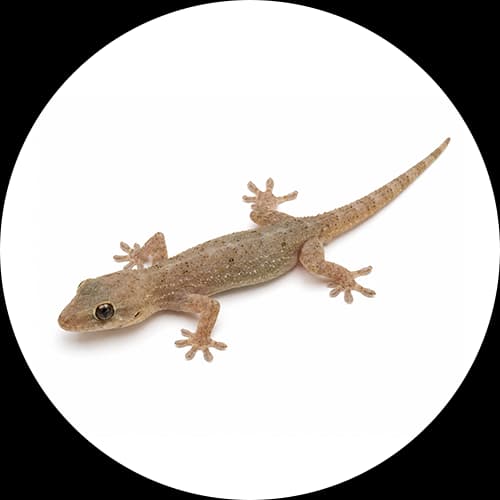
House Gecko / Common House Lizard (Hemidactylus spp.)
House geckos, commonly referred to as house lizards, are small reptiles frequently found around residential, commercial, and industrial buildings. They are highly adaptable and are commonly seen on walls, ceilings, windows, and near light sources where insects gather.
The most common species found around human dwellings include:
- • Common House Gecko (Hemidactylus frenatus)
- • Other Hemidactylus species depending on geographic location
House geckos are generally considered beneficial predators because they feed on insects such as mosquitoes, moths, flies, and cockroaches. However, they may become nuisance pests when present in large numbers due to droppings, contamination concerns, and their presence in sensitive areas such as food preparation and storage facilities.
Identification
Hemidactylus frenatus (Squamata: Gekkonidae)
Key Identification Features
Life Cycle
House geckos undergo gradual development: Egg → Juvenile → Adult.
They do not undergo metamorphosis like insects.
Small White Round Eggs
Common egg-laying sites:
Egg incubation: Approximately 45–90 days, depending on temperature and humidity
Miniature Hunters
Territorial Breeding Adults
Reproduction
House geckos reproduce successfully in warm environments.
Reproductive Characteristics:
Breeding is encouraged by:
Feeding Habits
House geckos are insectivorous predators.
Common prey includes:
They are attracted to:
Behavior
House geckos are mainly nocturnal. Characteristics:
Active during nighttime
Excellent climbers
Hide during daylight hours
Use camouflage to avoid predators
Hunt by ambush and quick movement
Common Hiding Locations
Habitat
House geckos are highly adaptable and commonly live near human structures.
Residential Areas
Common locations:
Commercial Areas
Frequently found in:
Industrial Areas
Common habitats:
Signs of House Gecko Presence
Visual Sightings
Common indicators:
• Lizards seen on walls and ceilings
• Activity near lights at night
• Multiple geckos around insect-rich areas
Droppings
House gecko droppings are a common sign. Characteristics:
• Small dark pellet
• Usually has a white chalky tip (uric acid)
• Found near walls, shelves, windows, and light fixtures
Egg Presence
Small white eggs may be found in:
• Cracks
• Behind equipment
• Storage areas
• Hidden corners
Damage and Nuisance Caused
House geckos generally cause limited direct damage but may create hygiene concerns.
Food Contamination
Potential contamination may occur through:
• Droppings
• Shed skin
• Body contact
Risk areas include:
• Food preparation areas
• Storage shelves
• Packaging areas
Workplace Concerns
House geckos may cause:
• Customer complaints
• Hygiene concerns
• Pest inspection issues
• Reduced perception of cleanliness
Equipment & Property Issues
Possible concerns:
• Droppings on equipment
• Presence inside electrical panels
• Odor from accumulated waste
Health Risks
House geckos are not venomous and generally do not attack humans. However, they may contribute to hygiene concerns.
Bacterial Contamination
Geckos may carry microorganisms on:
Potentially associated bacteria may include:
Salmonella species
Food Safety Concerns
Droppings may contaminate:
Favorable Conditions
House geckos thrive where there is:
Common contributing factors:
Seasonal Activity
House gecko activity increases during:
In tropical climates, they may remain active throughout the year.
Control and Management
Effective house gecko management requires an Integrated Pest Management (IPM) approach.
1. Inspection
Identify:
• Entry points
• Hiding locations
• Insect activity areas
• Food sources
2. Exclusion
The most effective long-term method:
• Seal openings
• Repair screens
• Block access points
• Improve building maintenance
3. Habitat Modification
Reduce:
• Insect populations
• Moisture sources
• Hiding areas
• Outdoor attractants
4. Removal and Monitoring
Methods may include:
• Manual removal
• Trapping methods where appropriate
• Regular inspections
• Monitoring activity areas
Why House Geckos Are Difficult to Control
House geckos are challenging because they:
Distribution
House geckos are distributed widely across tropical and subtropical regions. Common locations:
They are especially common in warm climates.
Comparison: House Gecko vs. Garden Lizard vs. Skink
| Feature | House Gecko | Garden Lizard | Skink |
|---|---|---|---|
| Size | Small (7–15 cm) | Larger (20–40 cm+) | Small-medium |
| Activity | Mainly nocturnal | Mainly daytime | Daytime |
| Habitat | Buildings, walls, ceilings | Gardens, trees, outdoor areas | Ground and vegetation |
| Feet | Sticky climbing pads | Claws | Short limbs |
| Food | Insects | Insects and small animals | Insects |
| Human Concern | Droppings and hygiene | Usually minimal | Minimal |
Common Reptiles Found Around Buildings
| Common Name | Scientific Group | Characteristics |
|---|---|---|
| House Gecko | Hemidactylus spp. | Indoor wall-climbing insect predator |
| Garden Lizard | Calotes spp. | Outdoor insect feeder |
| Skink | Scincidae family | Ground-dwelling lizard |
| Monitor Lizard | Varanus spp. | Large outdoor reptile |
Quick Facts
| Feature | Details |
|---|---|
| Common Name | House Gecko / Common House Lizard |
| Scientific Name | Hemidactylus frenatus |
| Order | Squamata |
| Family | Gekkonidae |
| Diet | Insects and small arthropods |
| Activity | Mainly nocturnal |
| Habitat | Buildings, walls, ceilings, light areas |
| Reproduction | Eggs laid in protected locations |
| Egg Incubation | 45–90 days |
| Lifespan | 3–5+ years |
| Major Concern | Droppings, contamination, nuisance presence |
Prevention
Structural Prevention
Reduce Food Sources
Since geckos follow insects:
Environmental Management
Commercial & Residential Lizard Exclusion
Control lizard populations through targeted insect management, entry point sealing, repellent barriers, and sanitary inspections.
Protect Your Property from House Geckos
Professional, safe, and effective pest management solutions for homes and businesses.