Millipedes
(Diplopoda)
Millipedes are slow-moving, segmented detritivorous myriapods with two pairs of legs per segment that curl into tight spirals when disturbed and invade buildings during heavy rainfall and moisture shifts. Learn about their identification, gradual life cycle, millipede vs centipede comparison, and prevention.
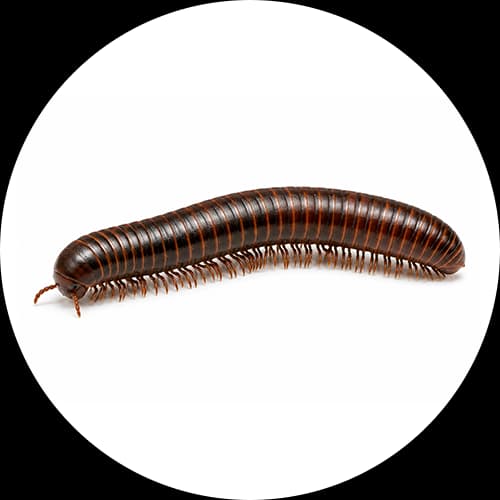
Millipedes (Diplopoda)
Millipedes are elongated, segmented arthropods belonging to the class Diplopoda. They are commonly found in moist environments such as soil, leaf litter, gardens, compost areas, and decaying vegetation.
Millipedes are generally detritivores, meaning they feed on decaying organic matter and play an important role in nutrient recycling. They are not considered major destructive pests; however, they may become nuisance pests when they migrate into buildings in large numbers, especially during periods of heavy rainfall, high humidity, or changes in environmental conditions.
Unlike centipedes, millipedes do not have venomous fangs and do not actively bite humans. Their main defense mechanism is the release of chemical secretions that may produce an unpleasant odor or cause minor skin irritation.
Common pest-associated millipede groups include:
Identification
Diplopoda (Arthropoda: Myriapoda)
Key Identification Features
Life Cycle
Millipedes undergo gradual development: Egg → Juvenile → Adult.
They do not have larval or pupal stages.
Moist Organic Soil Deposition
Common egg-laying sites:
Egg development: Several weeks depending on environmental conditions
Gradual Segment & Leg Addition
Characteristics:
Long-Lived Detritivores
Adult lifespan:
Approximately 1–7 years depending on species and environment
Reproduction
Millipedes reproduce sexually.
Reproductive Characteristics:
Breeding is encouraged by:
Feeding Habits
Millipedes are mainly decomposers.
Common Food Sources:
Some species may feed on:
Behavior
Millipedes are generally slow-moving and avoid light.
Activity Pattern:
• Mostly active at night
• Hide during daytime
• Prefer dark, damp environments
• Become more visible after rainfall
Defensive Behavior:
When disturbed, millipedes may:
• Curl into a tight spiral
• Remain motionless
• Release defensive chemicals
Chemical secretions may contain:
Habitat
Millipedes require moisture and organic material.
Natural Habitats
Common locations:
Residential Areas
Common locations:
Commercial Areas
Frequently found in:
Signs of Millipede Activity
Live Millipedes
Common indicators:
• Slow-moving insects around floors
• Large numbers near doors and windows
• Increased activity after rain
Dead Millipedes
Signs include:
• Accumulation near entrances
• Dried bodies along walls and corners
Environmental Indicators
Presence may indicate:
• Excess moisture
• Organic debris accumulation
• Poor drainage
• Vegetation touching buildings
Damage and Nuisance Caused
Millipedes usually do not cause serious structural damage.
Indoor Nuisance
Problems include:
• Unpleasant appearance
• Large numbers entering buildings
• Odor from crushed individuals
• Cleaning concerns
Plant Damage
Some millipede species may damage:
• Young seedlings
• Soft plant tissues
• Damaged plant material
Damage is usually limited and occurs mainly when populations are high.
Commercial Impact
Millipedes may affect: Nurseries, Greenhouses, Warehouses, Landscaped properties
Concerns include:
• Customer complaints
• Product contamination concerns
• Poor appearance of facilities
Health Risks
Millipedes are generally harmless to humans.
Bites
• Millipedes do not bite or sting
• They do not inject venom
Skin Irritation
Defensive secretions may cause:
• Mild irritation
• Temporary discoloration
• Burning sensation in sensitive individuals
Food Contamination Concerns
Large numbers in food storage areas may create:
• Hygiene concerns
• Customer complaints
• Product quality issues
Favorable Conditions
Millipedes thrive in:
Common contributing factors:
Seasonal Activity
Millipede activity increases during:
• Rainy seasons
• Periods of high humidity
• Cooler moist conditions
Indoor migration commonly occurs during:
• Heavy rainfall
• Dry periods when outdoor moisture decreases
• Seasonal environmental changes
Control and Management
Effective millipede management requires an Integrated Pest Management (IPM) approach.
1. Inspection
Identify:
• Entry points
• Moisture sources
• Outdoor breeding areas
• Vegetation conditions
2. Habitat Modification
Reduce:
• Moisture
• Organic debris
• Dense vegetation
• Shelter areas
3. Exclusion
Prevent entry through:
• Sealing cracks
• Maintaining barriers
• Improving drainage around structures
4. Population Reduction
Methods may include:
• Removal of visible millipedes
• Outdoor habitat management
• Targeted treatments around entry areas where required
Why Millipedes Are Difficult to Control
Millipedes can be challenging because they:
Distribution
Millipedes are found worldwide except in extremely dry environments and polar regions. They occur in:
They are especially common in humid and tropical regions.
Comparison: Millipede vs. Centipede
| Feature | Millipede | Centipede |
|---|---|---|
| Body Shape | Cylindrical or flattened | Flattened and elongated |
| Legs | Two pairs per segment | One pair per segment |
| Movement | Slow | Fast |
| Feeding | Decaying organic matter | Predatory insects |
| Defense | Curling and chemical secretion | Venomous bite |
| Human Risk | Very low | Can bite |
Comparison: Millipede vs. Insect
| Feature | Millipede | Insect |
|---|---|---|
| Body Segments | Many segments | Three main segments |
| Legs | Many pairs | Three pairs |
| Antennae | One pair | One pair |
| Wings | Absent | Often present |
| Example | Millipede | Cockroach, fly |
Common Ground-Dwelling Arthropods Around Buildings
| Common Name | Characteristics |
|---|---|
| Millipede | Slow-moving decomposer with many legs |
| Centipede | Fast predator with venomous claws |
| Earwig | Pincer-bearing insect found in moist areas |
| Pill Bug | Moisture-loving crustacean that rolls into a ball |
| Silverfish | Indoor moisture-associated insect |
Quick Facts
| Feature | Details |
|---|---|
| Common Name | Millipede |
| Scientific Class | Diplopoda |
| Phylum | Arthropoda |
| Diet | Decaying organic matter and plant debris |
| Body Structure | Many segmented body sections |
| Legs | Two pairs per body segment |
| Activity | Mostly nocturnal |
| Habitat | Soil, mulch, gardens, damp areas |
| Defense | Curling and chemical secretions |
| Lifespan | Several months to several years |
| Major Concern | Nuisance invasion and moisture indication |
Prevention
Moisture Management
Most important prevention measures:
Environmental Management
Structural Prevention
Professional Millipede & Moisture Pest Management
Stop seasonal monsoon invasions with comprehensive perimeter barrier treatments, foundation drainage inspections, and landscape clearing.
Protect Your Property from Millipedes
Professional, safe, and effective pest management solutions for homes and businesses.