Red Ants
(Family: Formicidae)
"Red ants" is a common name used for several species of reddish or reddish-brown ants found in homes, gardens, agricultural areas, and commercial properties. Learn about their identification, colony structure, life cycle, feeding habits, signs of infestation, and prevention.
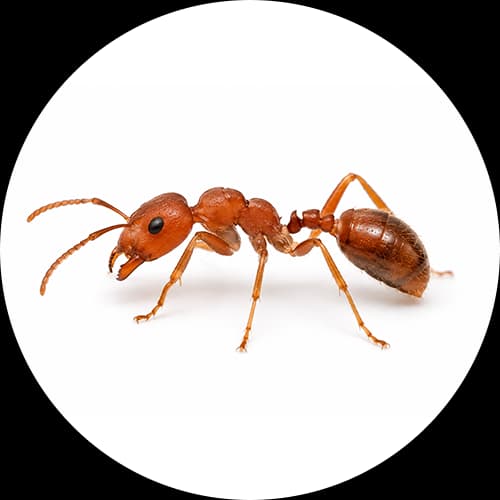
Red Ants (Family: Formicidae)
"Red ants" is a common name used for several species of reddish or reddish-brown ants found in homes, gardens, agricultural areas, and commercial properties. Depending on the region, common pest species include Red Imported Fire Ant (Solenopsis invicta), Tropical Fire Ant (Solenopsis geminata), and Weaver Ant (Oecophylla smaragdina). Among these, fire ants are the most significant structural and public health pests due to their aggressive behavior and painful stings.
Red ants are highly social insects that live in organized colonies with queens, workers, and reproductive males. They communicate using chemical pheromones and quickly recruit workers to food sources or to defend the colony. Their colonies may contain thousands to hundreds of thousands of individuals.
Identification
Formicidae
Red Ant Caste Identification
Worker Ants
Size: 2–6 mm (workers vary in size within the same colony)
Color: Reddish-brown to reddish-black
Reproductive Ants (Alates)
Size: 6–9 mm
Color: Reddish-brown body
Queen
Largest member of the colony
Winged before mating; sheds wings after establishing a nest
Colony Structure
Red ants are eusocial insects with specialized castes.
Queen
Workers
Males
Life Cycle
Red ants undergo complete metamorphosis.
Egg Stage
Larva Stage
Pupa Stage
Adult Stage
Development from egg to adult generally requires 30–45 days, depending on species and environmental conditions.
Reproduction
Red ants reproduce through nuptial (mating) flights.
During warm, humid conditions:
Habitat
Red ants occupy a wide range of habitats.
Common nesting sites include:
Fire ants typically construct conspicuous soil mounds, while weaver ants build nests by weaving leaves together using silk produced by their larvae.
Feeding Habits
Red ants are omnivorous and opportunistic. They commonly feed on:
Workers leave pheromone trails that direct nestmates to food sources.
Behavior
Highly social insects
Aggressive when nests are disturbed (especially fire ants)
Active during the day and night, depending on species
Use pheromones for communication and defense
Rapidly recruit workers to food sources
Defend colonies collectively with bites and stings
Colonies may contain 10,000–250,000 or more individuals
Signs of Infestation
Common indicators include:
Visible ant trails
Soil mounds in lawns or gardens (fire ants)
Leaf nests in trees (weaver ants)
Winged ants during mating season
Increased ant activity around food sources
Ants entering buildings through cracks and gaps
Painful stings following disturbance of outdoor nests
Damage Caused
Red ants can cause a range of problems depending on the species. Common impacts include:
Health Risks
Fire ants are medically significant pests because they:
Weaver ants and other red ants may bite, but their medical significance is generally lower than that of fire ants.
Favorable Conditions
Red ants thrive where the following conditions exist:
Seasonal Activity
Red ants remain active throughout the year in warm climates.
Activity generally increases during:
Winged reproductives usually emerge following warm, humid weather.
Why Red Ants Are Difficult to Eliminate
Red ants can be difficult to control because they:
Successful management usually requires treatment of the entire colony, including the queen or queens.
Distribution
Red ants are widely distributed across:
They are commonly found in:
Comparison: Red Ants vs. Black Ants vs. Carpenter Ants
| Feature | Red Ants | Black Ants | Carpenter Ants |
|---|---|---|---|
| Color | Red to reddish-brown | Black to dark brown | Black, red, or bicolored |
| Primary Concern | Painful stings and nuisance | Food contamination and nuisance | Wood excavation for nesting |
| Sting | Common in fire ants | Rare in most species | No sting; may bite |
| Nest Location | Soil, mounds, trees, gardens | Soil, walls, foundations | Damp or decayed wood |
| Colony Size | 10,000–250,000+ | Thousands to tens of thousands | Thousands to tens of thousands |
| Food | Sugars, proteins, insects | Sugars, proteins, insects | Sugars, insects, honeydew |
Common Pest Species
| Common Name | Scientific Name | Distribution |
|---|---|---|
| Red Imported Fire Ant | Solenopsis invicta | Americas, Asia, Australia |
| Tropical Fire Ant | Solenopsis geminata | Tropical and subtropical regions worldwide |
| Asian Weaver Ant | Oecophylla smaragdina | South Asia, Southeast Asia, Australia |
| Southern Fire Ant | Solenopsis xyloni | North America |
| European Fire Ant | Myrmica rubra | Europe, North America |
Quick Facts
| Feature | Details |
|---|---|
| Common Name | Red Ant |
| Scientific Family | Formicidae |
| Diet | Sugars, insects, proteins, honeydew |
| Colony Size | 10,000–250,000+ individuals (species dependent) |
| Nest Location | Soil, gardens, trees, lawns, foundations |
| Development | Egg → Larva → Pupa → Adult |
| Queen Lifespan | 5–7 years (species dependent) |
| Active Period | Year-round in warm climates |
| Swarming Season | Spring to summer (varies by species and region) |
| Major Risk | Painful stings, food contamination, nuisance infestations, plant pest protection |
Prevention
Effective prevention measures include:
Store food in sealed containers
Clean food spills immediately
Dispose of garbage regularly
Seal cracks and gaps around buildings
Remove aphid infestations from ornamental plants
Keep vegetation trimmed away from structures
Reduce excess soil moisture
Avoid disturbing visible ant mounds
Inspect outdoor furniture and landscaping materials before moving them
Targeted Fire Ant & Red Ant Eradication
Get in touch for specialized mound drenching, baiting systems, and perimeter defense for parks, lawns, and properties.
Protect Your Property from Red Ants
Professional, safe, and effective pest management solutions for homes and businesses.