Roof Rat
(Rattus rattus)
The roof rat (black rat) is an agile climber nesting in roofs, attics, and ceilings, causing structural damage, fire hazards, and food contamination. Learn about its identification, reproduction, behavior, health risks, and prevention.
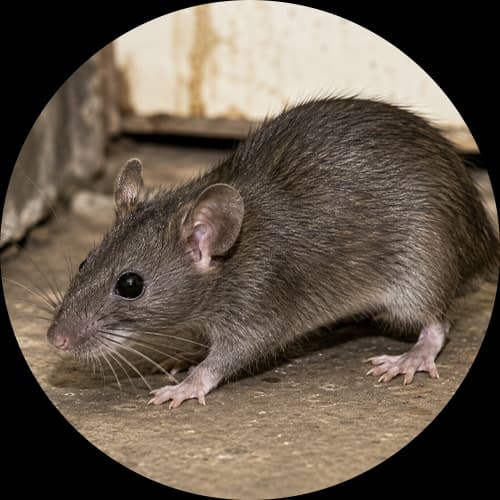
Roof Rat (Rattus rattus)
The roof rat, also known as the black rat or ship rat, is a highly adaptable rodent pest commonly associated with buildings, warehouses, agricultural facilities, and urban environments. It is an excellent climber and is frequently found in elevated areas such as roofs, ceilings, attics, wall voids, and trees, which gives it the name “roof rat.”
Roof rats are important pest species because they contaminate food, damage structures through gnawing, destroy stored products, and may transmit diseases through urine, droppings, and contaminated materials. They are particularly problematic in food storage facilities, restaurants, farms, and residential buildings.
Identification
Rattus rattus (Rodentia: Muridae)
Key Identification Features
Life Cycle
Roof rats reproduce quickly and can establish large populations when food and shelter are available.
Gestation & Litters
Pup Stage
Learning Feeding Routes
Maturity & Lifespan
Average lifespan:
• Wild: 6–12 months
• Protected environments: 1–2 years
Reproduction
Roof rats have a high reproductive potential.
Nesting Materials
Roof rats construct nests using:
Feeding Habits
Roof rats are omnivorous but have a strong preference for plant-based foods.
Common food sources include:
Feeding Behavior
Behavior
Roof rats have several behaviors that make them successful urban pests:
Primarily nocturnal
Excellent climbers
Good jumpers
Strong swimmers when necessary
Agile and cautious
Prefer elevated pathways
Use the same routes repeatedly
Movement
Typical activity range: 30–100 metres from the nest, depending on food availability.
Common travel routes include:
Nesting Behavior
Roof rats prefer dry, elevated nesting locations.
Common nesting sites:
Nests provide:
Habitat
Roof rats prefer elevated, protected locations and are excellent climbers. Common habitats include:
Residential Areas
Commercial Areas
Outdoor Areas
Signs of Infestation
Droppings
• Length: approximately 12–18 mm
• Shape: elongated with pointed ends
Found near:
• Food sources | • Runways
• Nesting areas | • Roof spaces
Gnaw Marks
Roof rats gnaw continuously to maintain their teeth. Damage may include:
• Electrical cables
• Wooden structures
• Plastic pipes
• Food packaging
• Stored materials
Noise
Common sounds include:
• Scratching
• Running
• Gnawing
• Movement in ceilings and roofs
Usually heard at night.
Other Signs:
Damage Caused
Roof rats create significant economic and structural problems.
Food Contamination
They contaminate food through:
Commonly affected industries:
Food processing, Restaurants, Warehouses, Agriculture
Structural Damage
Roof rats damage:
• Electrical wiring
• Insulation
• Roof materials
• Wooden structures
• Plastic pipes
• Stored products
Gnawing on cables creates:
Fire hazards • Equipment failures • Operational disruptions
Agricultural Damage
They may damage:
• Fruit crops
• Stored grains
• Seeds
• Livestock feed
• Plantation crops
Health Risks
Roof rats are associated with several diseases and health concerns. Potential risks include:
Leptospirosis
Caused by bacteria transmitted through infected rodent urine
Salmonellosis
Foodborne illness caused by contamination of food products
Rat-Bite Fever
Can occur through bites or contact with contaminated materials
Plague
Historically associated with fleas carried by rats
Allergies
Rodent allergens from urine, droppings, hair, and dander may contribute to respiratory issues.
Favorable Conditions
Roof rats thrive where there is:
Population increases in:
Seasonal Activity
Roof rats remain active throughout the year.
Outdoor activity may increase during:
• Cooler months when they seek shelter indoors
• Harvest seasons when food availability increases
Indoor infestations can continue year-round.
Why Roof Rats Are Difficult to Control
Roof rats are challenging pests because they:
Effective control requires an Integrated Pest Management (IPM) approach involving:
• Inspection
• Exclusion
• Sanitation
• Monitoring
• Population reduction
Distribution
Roof rats are distributed worldwide and are common in:
They are found in:
Comparison: Roof Rat vs. Norway Rat vs. House Mouse
| Feature | Roof Rat | Norway Rat | House Mouse |
|---|---|---|---|
| Scientific Name | Rattus rattus | Rattus norvegicus | Mus musculus |
| Body Size | Medium-large | Large | Small |
| Weight | 120–300 g | 200–500+ g | 12–30 g |
| Tail | Longer than body | Shorter than body | Long and thin |
| Body Shape | Slim and agile | Heavy and robust | Small and slender |
| Preferred Area | Roofs, trees, upper floors | Ground level, sewers, burrows | Indoor walls and cabinets |
| Climbing Ability | Excellent | Moderate | Good |
| Droppings | Pointed ends, 12–18 mm | Blunt ends, 18–25 mm | Small, 3–6 mm |
Common Rodent Species Found Around Buildings
| Common Name | Scientific Name | Characteristics |
|---|---|---|
| Roof Rat | Rattus rattus | Excellent climber; nests in elevated areas |
| Norway Rat | Rattus norvegicus | Burrowing rat; ground-level infestations |
| House Mouse | Mus musculus | Small indoor rodent; rapid breeder |
| Field Rat | Rattus spp. | Agricultural pest species |
Quick Facts
| Feature | Details |
|---|---|
| Common Name | Roof Rat / Black Rat |
| Scientific Name | Rattus rattus |
| Order | Rodentia |
| Family | Muridae |
| Diet | Fruits, grains, seeds, food waste, insects |
| Activity | Mainly nocturnal |
| Habitat Preference | Roofs, ceilings, trees, elevated areas |
| Breeding Rate | High; multiple litters per year |
| Gestation Period | 21–24 days |
| Litter Size | 5–10 pups |
| Entry Size | Can enter through gaps of approximately 12 mm |
| Lifespan | 6–12 months in wild conditions |
| Major Risk | Food contamination, property damage, disease transmission |
Prevention
Structural Prevention
Sanitation Measures
Environmental Management
Professional Roof Rat Baiting & Proofing
Protect your roof spaces, attics, and ceilings with comprehensive rodent proofing, elevated bait stations, and advanced monitoring.
Protect Your Property from Roof Rats
Professional, safe, and effective pest management solutions for homes and businesses.