Silverfish
(Lepisma saccharina) (Zygentoma: Insecta)
Silverfish are ancient wingless insects known for their shiny metallic scales, carrot-shaped body, and three tail filaments that feed on books, wallpaper, glue, and starch materials. Learn about their identification, multi-year gradual life cycle, silverfish vs cockroach comparison, and moisture control.
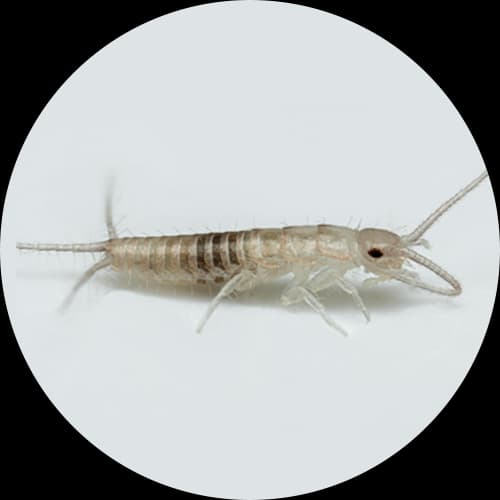
Silverfish (Lepisma saccharina)
Silverfish are small, wingless insects belonging to the order Zygentoma. They are ancient primitive insects known for their silvery appearance, flattened body, and fish-like movement. Silverfish are common indoor nuisance pests associated with moisture, darkness, and starch-based materials.
They are frequently found in homes, offices, libraries, warehouses, museums, and storage areas where they feed on materials containing carbohydrates, starches, and proteins.
Silverfish do not bite humans, do not transmit diseases, and do not cause structural damage. However, they can damage valuable materials such as books, documents, wallpaper, and stored paper products.
Common silverfish and related species include:
• Silverfish (Lepisma saccharina)
• Four-lined silverfish (Ctenolepisma lineata)
• Gray silverfish (Ctenolepisma longicaudata)
• Firebrat (Thermobia domestica)
Identification
Lepisma saccharina (Zygentoma: Insecta)
Key Identification Features
Life Cycle
Silverfish undergo gradual metamorphosis: Egg → Nymph → Adult.
They do not have larval or pupal stages.
Hidden Crevices & Paper Stacks
Common egg-laying sites:
Egg development: Several weeks depending on temperature and humidity
Repeated Molting Feeders
Characteristics:
Development: Several months to years depending on conditions
Multi-Year Lifespan & Indefinite Molts
Adult lifespan:
Approximately 2–8 years under favorable conditions
Reproduction
Silverfish reproduce through indirect mating.
Reproductive Characteristics:
Population growth is encouraged by:
Feeding Habits
Silverfish feed on materials rich in starch, carbohydrates, and proteins.
Common Food Sources (They consume):
Stored Product Feeding (They may damage):
Behavior
Silverfish are secretive and avoid light.
Activity Pattern:
• Mostly nocturnal
• Hide during daylight hours
• Move quickly when disturbed
• Prefer dark, humid environments
Common Hiding Locations:
Habitat
Silverfish require moisture and shelter.
Indoor Habitats
Common locations:
Commercial Habitats
Frequently found in:
Environmental Preferences
Silverfish prefer:
Signs of Silverfish Activity
Live Sightings
Indicators include:
• Fast-moving silver insects
• Sightings at night
• Insects found near moisture sources
Feeding Damage
Signs include:
• Irregular holes in paper
• Scraped surfaces
• Damaged book edges
• Missing sections of wallpaper
Fecal Marks
Possible signs:
• Small dark spots
• Yellowish stains on damaged materials
Shed Skins
Silverfish molt throughout their lives. Signs:
• Empty skins
• Fine insect debris in hiding areas
Damage and Nuisance Caused
Paper & Document Damage
Silverfish can damage:
Books, Historical documents, Files, Photographs, Archives
They may feed on:
• Paper fibers
• Glue
• Starch-based coatings
Household Damage
Possible damage includes:
• Wallpaper damage
• Book damage
• Fabric staining
• Packaging damage
Commercial Impact
Silverfish may affect:
Libraries, Museums, Hotels, Offices, Warehouses
Concerns include:
• Damage to valuable materials
• Product contamination concerns
• Customer complaints
Health Risks
Bites and Stings
Silverfish:
• Do not bite humans
• Do not sting
• Do not feed on blood
Disease Transmission
Not known to transmit human diseases
Allergy Concerns
Large infestations may contribute to:
• Insect debris accumulation
• Possible sensitivity reactions in some individuals
Favorable Conditions
Silverfish thrive in:
Common contributing factors:
Seasonal Activity
Silverfish may increase during:
Indoor populations can persist throughout the year.
Control and Management
Effective silverfish management requires an Integrated Pest Management (IPM) approach.
1. Inspection
Identify:
• Moisture sources
• Food sources
• Hiding areas
• Infestation level
2. Moisture Correction
Important control measure:
• Reduce humidity
• Fix leaks
• Improve air circulation
3. Sanitation
Actions include:
• Remove excess paper storage
• Reduce cardboard clutter
• Clean storage areas
• Protect valuable documents
4. Exclusion
Prevent entry and hiding by:
• Sealing cracks
• Repairing gaps
• Maintaining building structure
5. Targeted Treatment
May include:
• Crack and crevice treatments
• Monitoring devices
• Localized pest management applications
Why Silverfish Are Difficult to Control
Silverfish can be challenging because they:
Distribution
Silverfish are found worldwide. They occur in:
They are especially common in warm and humid regions.
Comparison: Silverfish vs. Cockroach
| Feature | Silverfish | Cockroach |
|---|---|---|
| Size | 10–20 mm | Usually larger |
| Body Shape | Flattened, tapered | Broad oval |
| Wings | Absent | Present in many species |
| Activity | Mostly nocturnal | Mostly nocturnal |
| Food | Starch and carbohydrates | Wide variety |
Comparison: Silverfish vs. Psocid
| Feature | Silverfish | Psocid |
|---|---|---|
| Size | Larger | Very small |
| Body | Long and flattened | Soft-bodied |
| Movement | Fast | Slow |
| Food | Starch, paper, glue | Mold and fungi |
| Damage | Paper/material damage | Mainly nuisance indicator |
Common Moisture-Associated Pests
| Common Name | Characteristics |
|---|---|
| Silverfish | Paper and starch-feeding insect |
| Psocid | Tiny mold-associated insect |
| Springtail | Moisture-loving jumping organism |
| Earwig | Outdoor insect with pincers |
| Centipede | Predator found in damp areas |
Quick Facts
| Feature | Details |
|---|---|
| Common Name | Silverfish |
| Scientific Name | Lepisma saccharina |
| Order | Zygentoma |
| Class | Insecta |
| Diet | Starch, paper, glue, carbohydrates |
| Size | 10–20 mm |
| Development | Egg → Nymph → Adult |
| Activity | Mostly nocturnal |
| Habitat | Damp, dark indoor areas |
| Human Risk | None |
| Major Concern | Damage to books, paper, and stored materials |
Prevention
Moisture Management
Important measures:
Storage Management
Structural Prevention
Document, Library & Archive Silverfish Elimination
Protect valuable books, confidential archives, and historical documents with specialized non-staining micro-encapsulated treatments and dehumidification strategies.
Protect Your Documents & Property from Silverfish
Professional, safe, and effective pest management solutions for homes, libraries, and commercial archives.