Snakes
(Serpentes) (Squamata: Reptilia)
Snakes are legless carnivorous reptiles that play vital ecological roles controlling rodents but pose safety and venom concerns when entering residential, commercial, or industrial properties. Learn about their identification, venomous vs non-venomous classification, life cycle, signs of presence, and safe exclusion.
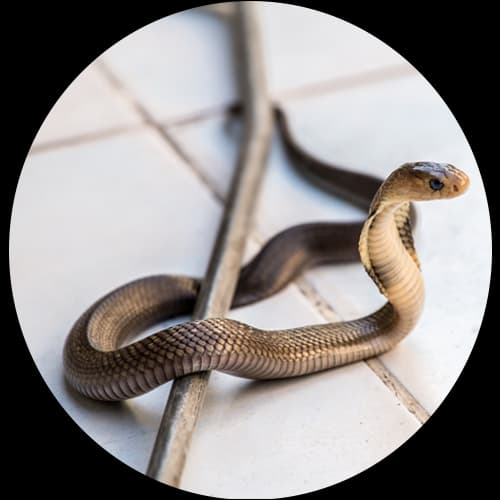
Snakes (Serpentes)
Snakes are elongated, legless reptiles belonging to the suborder Serpentes within the order Squamata. They are found worldwide in a wide range of habitats including forests, agricultural areas, wetlands, grasslands, and urban environments.
Snakes play an important ecological role by controlling populations of rodents, insects, frogs, and other small animals. However, when snakes enter residential, commercial, or industrial premises, they may become a nuisance and safety concern, particularly due to fear, potential venomous species, and the risk of human encounters.
In pest management, snake management focuses primarily on prevention, exclusion, habitat modification, and safe removal rather than conventional pest control methods.
Common snake groups encountered around buildings include:
(Species vary significantly by geographic region.)
Identification
Serpentes (Squamata: Reptilia)
Key Identification Features
Snake Classification by Behavior
1. Non-Venomous Snakes
Examples:
Characteristics:
• Capture prey by swallowing or constriction
• Generally avoid humans
• Usually not medically significant
2. Venomous Snakes
Examples:
Characteristics:
• Possess venom glands and specialized fangs
• Use venom mainly for prey capture and defense
• Require professional handling
Life Cycle
Snakes undergo direct development: Egg → Hatchling → Juvenile → Adult.
(Some species give birth to live young.)
Protected Soil / Mound Incubation
Common egg-laying locations:
Egg incubation: Several weeks to months depending on species
Independent Fully Formed Young
Rapid Growth & Feeding
Territory & Decades of Life
Lifespan:
Several years to decades depending on species
Reproduction
Snake reproduction varies by species.
Egg-Laying Species
Known as oviparous snakes. Examples:
• Many pythons
• Rat snakes
• Cobras
Live-Bearing Species
Some snakes give birth to live young. Examples:
• Certain vipers
• Some boas
Breeding Factors
Reproduction is influenced by:
• Temperature
• Food availability
• Seasonal conditions
• Habitat suitability
Feeding Habits
Snakes are carnivorous predators.
Common Prey Includes:
Feeding Behavior:
• Swallow prey whole
• Do not chew food
• Use specialized jaws that allow wide opening
Some species:
Behavior
Snakes are generally secretive animals.
Activity Patterns (Depending on species):
Nocturnal
Night-active
Diurnal
Day-active
Crepuscular
Active during dawn and dusk
Defensive Behavior:
When threatened, snakes may:
• Escape quickly
• Hide
• Coil defensively
• Hiss
• Display warning behavior
• Bite if cornered
Most snake encounters occur when the animal is accidentally disturbed.
Common Hiding Locations
Residential Areas
Commercial Areas
Industrial Areas
Signs of Snake Presence
Visual Sightings
Most common indicator:
Live snake observed on premises
Shed Skin
Snakes periodically shed their skin. Signs:
• Transparent skin pieces
• Found near hiding areas
Droppings
Snake droppings may contain:
• Dark fecal material
• White uric acid deposits
• Hair or bone remains from prey
Track Marks
Possible signs:
• Slithering trails in dust, soil, or sand
• Movement paths near walls or vegetation
Prey Activity
Associated with:
• Rodent activity
• Frog populations
• Dense vegetation
Damage and Nuisance Caused
Snakes generally do not damage structures.
Safety Risk
Potential risks include:
• Snake bites
• Fear among occupants
• Restricted movement around affected areas
Workplace Concerns
May affect:
• Worker safety
• Site operations
• Customer confidence
Common sensitive locations:
Schools, Hotels, Warehouses, Construction sites, Residential complexes
Secondary Concerns
Snakes may enter buildings seeking:
Health Risks
Snake Bites
Snake bites may occur when:
• Snakes are handled
• Snakes are cornered
• People accidentally step near hidden snakes
Venomous Snake Bites
Possible symptoms include:
• Pain and swelling
• Bleeding problems
• Muscle weakness
• Breathing difficulties
• Neurological effects
Immediate medical attention is required for suspected venomous bites.
Non-Venomous Bites
May cause:
• Minor wounds
• Local irritation
• Risk of secondary infection
Favorable Conditions
Snakes are attracted to areas with:
Common contributing factors:
Seasonal Activity
Snake activity increases during:
In tropical climates, activity may continue throughout the year.
Control and Management
Effective snake management requires an Integrated Pest Management (IPM) approach.
1. Inspection
Identify:
• Snake entry points
• Hiding locations
• Food sources
• Environmental attractants
2. Exclusion
Most effective long-term method:
• Seal openings
• Maintain barriers
• Install protective screens
• Improve site maintenance
3. Habitat Modification
Reduce:
• Vegetation cover
• Debris
• Moist hiding areas
• Rodent activity
4. Safe Removal
Should be carried out by:
• Trained personnel
• Wildlife handlers
• Authorized professionals
Avoid handling unknown snakes.
Why Snakes Are Difficult to Manage
Snakes can be challenging because they:
Distribution
Snakes are found worldwide except in Antarctica and some isolated regions. They occur in:
Species diversity is highest in warm tropical and subtropical regions.
Comparison: Snake vs. Lizard
| Feature | Snake | Lizard |
|---|---|---|
| Legs | Usually absent | Usually four legs |
| Body | Long and cylindrical | More varied body shapes |
| Movement | Slithering | Walking or crawling |
| Eyes | Fixed transparent covering | Movable eyelids in many species |
| Feeding | Swallows prey whole | Variable feeding habits |
Comparison: Venomous vs. Non-Venomous Snake
| Feature | Venomous Snake | Non-Venomous Snake |
|---|---|---|
| Venom Glands | Present | Usually absent |
| Fangs | Specialized fangs | Small teeth |
| Risk | Potential medical emergency | Usually low risk |
| Defense | May bite when threatened | Usually avoids humans |
| Control | Requires professional handling | Safe removal recommended |
Common Wildlife Intruders Around Buildings
| Common Name | Characteristics |
|---|---|
| Snake | Reptile seeking food and shelter |
| Gecko | Small insect-eating reptile |
| Rat | Common prey species attracting snakes |
| Frog | Potential snake food source |
| Lizard | Small reptile found around buildings |
Quick Facts
| Feature | Details |
|---|---|
| Common Name | Snake |
| Scientific Group | Serpentes |
| Class | Reptilia |
| Diet | Rodents, birds, frogs, reptiles |
| Body Structure | Long, limbless reptile |
| Activity | Species-dependent |
| Habitat | Soil, vegetation, buildings, natural areas |
| Reproduction | Eggs or live birth |
| Lifespan | Several years to decades |
| Major Concern | Safety risk and human encounters |
Prevention
Structural Prevention
Environmental Mgmt
Reduce snake-friendly conditions:
Rodent Control
Rodent management is an important preventive measure because many snakes follow rodent populations. Actions:
Safe Snake Exclusion & Boundary Protection
Prevent dangerous snake encounters around homes, schools, and commercial facilities with comprehensive perimeter sealing, repellent barriers, and rodent suppression.
Protect Your Property from Snakes
Professional, safe, and effective pest management and wildlife exclusion solutions.