Spiders
(Araneae)
Spiders are eight-legged predatory arachnids that feed on insects and construct silk webs, creating unsightly cobweb accumulations and anxiety in buildings. Learn about their identification, incomplete development life cycle, arachnid comparison, and prevention.
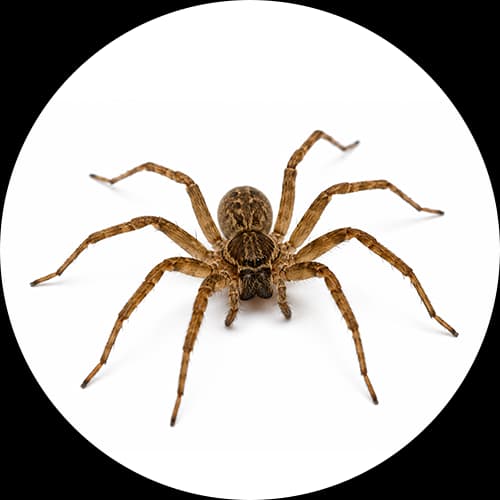
Spiders (Araneae)
Spiders are eight-legged arthropods belonging to the order Araneae. They are commonly found in residential, commercial, agricultural, and industrial environments. Spiders are predators that feed primarily on insects and other small arthropods, making them beneficial in controlling insect populations.
Although most spiders are harmless to humans, their presence inside buildings can become a nuisance due to web formation, droppings, fear factor, and occasional bites from certain species. Spider infestations often indicate the presence of suitable hiding areas and an available insect food source.
Common pest-associated spider groups include:
Identification
Araneae (Arachnida: Arthropoda)
Key Identification Features
Life Cycle
Spiders undergo incomplete development: Egg → Spiderling → Adult.
Unlike insects, spiders do not have larval or pupal stages.
Protective Silk Sacs
Egg sac locations:
Egg number varies by species: From a few eggs to several hundred
Miniature Molting Hunters
Spiderlings:
Feeding & Web Reproduction
Typical lifespan:
Several months to several years
Reproduction
Spiders reproduce through mating between adult males and females.
Reproductive Characteristics:
Breeding increases when:
Feeding Habits
Spiders are predators and mainly feed on insects.
Common prey includes:
Feeding methods:
Most spiders inject venom to immobilize prey before feeding.
Behavior
Spiders display diverse hunting behaviors. Common Behaviors:
Build webs in protected areas
Hide during daylight
Hunt at night or during low activity periods
Remain near insect activity zones
Avoid human contact
Common Hiding Locations
Indoor:
Corners, Ceilings, Behind furniture, Storage areas, Garages, Basements, Wall voids
Outdoor:
Gardens, Vegetation, Under stones, Tree bark, Outdoor structures
Habitat
Spiders are highly adaptable and can live in many environments.
Residential Areas
Common locations:
Commercial Areas
Frequently found in:
Industrial Areas
Common habitats:
Signs of Spider Activity
Web Presence
Common indicators:
• Spider webs in corners
• Cobweb accumulation
• Webs around lights and windows
Common web locations:
Ceilings, Wall corners, Storage areas, Outdoor lights
Egg Sacs
Signs include:
• Small silk sacs attached to webs
• Protected areas containing spider eggs
Spider Droppings
Spider waste may appear as:
• Small dark spots
• White or gray stains
Common locations:
Under webs, Walls, Window frames
Live Sightings
Increased sightings may indicate:
• High insect activity
• Suitable hiding areas
• Environmental conditions supporting spiders
Damage and Nuisance Caused
Spiders generally do not cause structural damage. Common Problems Include:
Web Formation
• Creates an unclean appearance
• Requires frequent cleaning
• Affects building aesthetics
Food & Workplace Concerns
Spider presence may be undesirable in:
• Food facilities
• Hotels
• Retail environments
• Healthcare facilities
Fear & Customer Complaints
Even harmless spiders may cause:
• Anxiety among occupants
• Customer complaints
• Negative perception of hygiene
Health Risks
Most spiders are harmless and avoid humans.
Spider Bites
Bites generally occur when spiders are:
Possible reactions:
• Mild pain
• Redness
• Swelling
• Local irritation
Venomous Species
Some regions contain medically significant spiders; however, most household spiders pose little health risk.
Examples of medically important groups in some regions include:
• Widow spiders (Latrodectus spp.)
• Recluse spiders (Loxosceles spp.)
Favorable Conditions
Spiders thrive where there is:
Common contributing factors:
Seasonal Activity
Spider activity generally increases during:
Indoor activity may continue year-round where:
• Temperature is stable
• Food sources are available
Control and Management
Effective spider management requires an Integrated Pest Management (IPM) approach.
1. Inspection
Identify:
• Spider species
• Web locations
• Hiding areas
• Insect activity sources
2. Sanitation and Removal
Actions include:
• Removing webs regularly
• Cleaning corners and storage areas
• Removing egg sacs
• Reducing clutter
3. Exclusion
Prevent entry by:
• Sealing cracks
• Repairing screens
• Improving building maintenance
4. Targeted Control
May include:
• Localized treatments
• Web removal programs
• Monitoring activity
• Insect population reduction
Why Spiders Are Difficult to Control
Spiders can be challenging because they:
Distribution
Spiders are found worldwide except in extreme polar conditions. They occur in:
Thousands of spider species exist globally, with only a small number considered medically significant.
Comparison: Spider vs. Insects
| Feature | Spider | Insect |
|---|---|---|
| Body Regions | Two | Three |
| Legs | Eight | Six |
| Antennae | Absent | Present |
| Wings | Usually absent | Often present |
| Eyes | Usually eight simple eyes | Compound eyes common |
| Example | Spider | Cockroach, fly, ant |
Common Spider Types Found Around Buildings
| Common Name | Characteristics |
|---|---|
| House Spider | Builds webs in corners and quiet areas |
| Cellar Spider | Long legs; commonly found indoors |
| Cobweb Spider | Creates irregular sticky webs |
| Wolf Spider | Active hunter; does not rely on webs |
| Jumping Spider | Small active hunter with excellent vision |
| Orb Weaver Spider | Creates circular outdoor webs |
Quick Facts
| Feature | Details |
|---|---|
| Common Name | Spider |
| Scientific Order | Araneae |
| Class | Arachnida |
| Diet | Insects and other arthropods |
| Body Structure | Two body segments |
| Legs | Eight |
| Development | Egg → Spiderling → Adult |
| Web Production | Silk used for webs and egg protection |
| Activity | Many species nocturnal |
| Lifespan | Months to several years |
| Major Concern | Web nuisance, fear, occasional bites |
Prevention
Structural Prevention
Environmental Management
Reduce Food Sources
Since spiders follow insects:
Professional Spider & Cobweb Removal Solutions
Eliminate cobweb buildups, insect prey infestations, and hidden egg sacs across ceiling voids, storage units, and building facades.
Protect Your Property from Spiders
Professional, safe, and effective pest management solutions for homes and businesses.