Wasps
(Vespidae and Other Wasp Families)
Wasps are agile flying insects with narrow waists capable of repeated painful stings when defending paper or mud nests built under eaves, roof voids, and walls. Learn about their identification, complete metamorphosis life cycle, nest architecture, wasp vs bee comparison, and prevention.
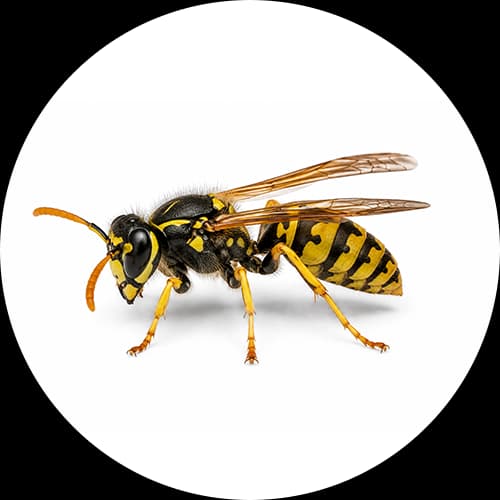
Wasps (Vespidae & Other Families)
Wasps are flying insects belonging to the order Hymenoptera and are closely related to bees and ants. They are found worldwide and play an important ecological role as predators of other insects and as pollinators.
In pest management, wasps are considered significant stinging pests because certain species can become aggressive when defending their nests. Wasps commonly build nests around buildings, gardens, trees, wall voids, roof spaces, and other sheltered locations.
Unlike honey bees, most wasps are capable of multiple stings because their stingers are smooth and can be withdrawn without harming the insect. Wasp stings can cause painful reactions and may trigger severe allergic responses in sensitive individuals.
Common pest wasp groups include:
Identification
Hymenoptera: Vespidae & Sphecidae
Key Identification Features
Life Cycle
Wasps undergo complete metamorphosis: Egg → Larva → Pupa → Adult.
Social wasps have colonies with different castes: Queen, Workers, Males.
Individual Nest Cells
Eggs hatch within: Approximately 3–7 days
Worker-Fed Legless Larvae
Larval development: Approximately 10–20 days
Sealed Cell Development
Pupal period: Approximately 7–14 days
Colony Caste Roles
Adult lifespan:
Workers: Several weeks | Queens: Several months to over a year depending on species
Caste Roles in Social Wasps
Workers:
• Build and maintain nests
• Feed larvae
• Defend colonies
• Collect food
Queens:
• Establish colonies
• Lay eggs
Males:
• Reproductive role
Reproduction
Wasp reproduction varies between solitary and social species.
Social Wasps
Solitary Wasps
Nesting Behavior
Wasps construct nests using different materials depending on species.
Paper Wasp Nests
Made from: Chewed wood fibers, plant material mixed with saliva
Appearance: Open umbrella-like combs
Common locations:
Yellowjacket and Hornet Nests
Made from: Often enclosed nests made from paper-like material
Appearance: Enclosed layered paper envelope
Common locations:
Mud Dauber Nests
Made from: Constructed from mud
Appearance: Tubular mud cells
Common locations:
Feeding Habits
Adult wasps have varied feeding habits.
Adult Food Sources:
Larval Food Sources (Workers provide larvae with):
Behavior
Social Wasps Characteristics:
Live in colonies
Defend nests aggressively
Communicate through chemicals and behavior
Increase defensive activity near nests
Activity Pattern:
• Mainly active during daytime
• Flight activity increases in warm weather
• Attracted to food odors and sweet substances
Common Wasp Locations
Residential Areas
Commercial Areas
Industrial Areas
Signs of Wasp Activity
Nest Presence
Common indicators:
• Visible paper nests
• Mud tubes
• Increased wasp movement around a location
Wasp Traffic
Signs include:
• Repeated flight paths
• Wasps entering cracks or wall openings
• Increased activity near food sources
Chewed Wood Damage
Some species collect wood fibers for nest construction. Signs:
• Scraped wood surfaces
• Fine wood particles near nesting areas
Damage and Nuisance Caused
Wasps generally do not damage structures significantly, but they create safety concerns.
Stinging Risk
Wasps may sting when:
• Nests are disturbed
• People approach colonies
• Workers defend feeding areas
Workplace & Public Concerns
Wasp activity can affect:
Outdoor dining areas, Schools, Parks, Warehouses, Residential properties
Problems include:
• Customer complaints
• Employee safety concerns
• Restricted outdoor activities
Health Risks
Wasp Stings
Common reactions include:
Allergic Reactions
Some individuals may experience severe reactions, including:
• Difficulty breathing
• Facial or throat swelling
• Dizziness
• Anaphylaxis
Severe reactions require immediate medical attention.
Favorable Conditions
Wasps thrive where there is:
Common attractants:
Seasonal Activity
Wasp activity is strongly seasonal. Activity increases during:
Spring: Colony establishment
Summer: Worker population growth
Late summer / autumn: Increased food-seeking and defensive behavior
In warm climates, activity may continue for longer periods.
Control and Management
Effective wasp management requires an Integrated Pest Management (IPM) approach.
1. Inspection
Identify:
• Wasp species
• Nest location
• Colony size
• Entry points
• Activity patterns
2. Nest Management
Approaches depend on:
• Species
• Nest location
• Safety risk
• Colony activity
Professional removal is recommended for active nests in high-risk areas.
3. Exclusion
Prevent nesting by:
• Sealing openings
• Maintaining structures
• Reducing sheltered spaces
4. Monitoring
Methods include:
• Visual inspections
• Activity tracking
• Seasonal inspections
Why Wasps Are Difficult to Control
Wasps can be challenging because they:
Distribution
Wasps are found worldwide except in extreme polar regions. They occur in:
They are especially common in warm and temperate climates.
Comparison: Wasp vs. Bee vs. Hornet
| Feature | Wasp | Bee | Hornet |
|---|---|---|---|
| Body | Slender, narrow waist | Hairy, rounded | Large wasp species |
| Food | Insects, nectar, sugars | Mainly pollen and nectar | Insects and sugars |
| Sting | Can sting repeatedly | Usually one sting | Can sting repeatedly |
| Body Hair | Little hair | More hairy | Moderate hair |
| Nest | Paper, mud, cavities | Wax combs | Large paper nests |
Common Stinging Pests Around Buildings
| Common Name | Characteristics |
|---|---|
| Paper Wasp | Builds open paper nests under sheltered areas |
| Yellowjacket | Aggressive social wasp attracted to food |
| Hornet | Large wasp with powerful sting |
| Mud Dauber | Solitary wasp that builds mud nests |
| Potter Wasp | Builds small mud nests |
Quick Facts
| Feature | Details |
|---|---|
| Common Name | Wasp |
| Scientific Order | Hymenoptera |
| Diet | Insects, nectar, sugary substances |
| Development | Egg → Larva → Pupa → Adult |
| Habitat | Gardens, buildings, cavities, trees |
| Activity | Mainly daytime |
| Nest Material | Paper fibers or mud |
| Colony Size | Few individuals to thousands (species dependent) |
| Sting Ability | Females can sting repeatedly |
| Major Concern | Stings and allergic reactions |
Prevention
Structural Prevention
Sanitation Management
Environmental Management
Safe Professional Wasp & Hornet Nest Removal
Protect residential and commercial outdoor spaces with safe, professional nest removal, barrier treatments, and structural sealing.
Protect Your Property from Wasps
Professional, safe, and effective pest management solutions for homes and businesses.