 General
A rat sighting may seem like a minor household problem, but recurring rodent activity can quickly become a larger pest management concern. Rats and mice can contaminate food, damage electrical wiring and stored materials, create unpleasant odours, and establish hidden nesting areas that are difficult to detect.
When faced with a rodent problem, many property owners in Guwahati first consider DIY solutions such as traps, repellents, or commercially available rodent-control products. These methods may provide temporary relief in limited situations, but they may not address the underlying cause of a recurring infestation.
This raises an important question:
Is DIY rat control enough, or is professional rodent control a better approach?
The right solution depends on the extent of the infestation, the property's layout, the source of rodent activity, and whether effective preventive measures can be implemented.
Why Rodent Infestations Should Not Be Ignored
Rodents are opportunistic pests that can adapt easily to residential and commercial environments. They look for three basic requirements: food, water, and shelter.
Once they find suitable conditions, rodents may move through kitchens, storage rooms, ceilings, wall voids, utility areas, drains, warehouses, restaurants, offices, and other concealed spaces.
A visible rat is also not necessarily the only rodent present on a property. Repeated sightings can indicate that rodents have established movement routes or nesting areas nearby.
Common signs of rodent activity include:
Droppings around food-storage or concealed areas
Gnaw marks on wires, wood, plastic, or packaging
Scratching or movement sounds, particularly at night
Damaged food packets or stored products
Nesting materials in dark or undisturbed areas
Grease or rub marks along walls and frequently used paths
Unusual odours from concealed areas
Burrows around outdoor spaces
Repeated rodent sightings
Early identification allows property owners to address the problem before rodent activity becomes more extensive.
What Does DIY Rat Control Involve?
DIY rat control generally focuses on reducing visible rodent activity using methods that can be carried out by property owners.
Depending on the situation, this may include:
Traps
Traps can help capture rodents when they are correctly positioned along active movement routes. However, trapping a visible rodent does not necessarily mean the infestation has been completely eliminated.
Improving Food Storage
Food should be stored in sealed containers, and spills or food residues should be cleaned promptly. Garbage should also be removed regularly.
Sealing Accessible Gaps
Cracks, holes, gaps around pipes, cable entries, doors, and other potential access points should be identified and sealed wherever practical.
Reducing Clutter
Unused cartons, debris, and poorly organised storage areas can provide rodents with shelter and nesting opportunities.
These measures are useful as part of general rodent prevention, but they may have limitations when an infestation is already established.
Where DIY Rat Control Can Fall Short
One of the biggest challenges with DIY treatment is that rodents often remain hidden.
They may nest inside wall cavities, ceilings, storage areas, utility spaces, drainage zones, or other locations that are difficult to access. Removing one rat without identifying the wider source of activity may therefore provide only temporary results.
DIY treatment can also be challenging when:
Rodent sightings occur repeatedly
Droppings are found in several areas
There are multiple possible entry points
Rodents are nesting in inaccessible locations
Electrical wiring or stored goods have been damaged
The property has extensive storage or commercial operations
Rodent activity returns after initial treatment
The source of the infestation is unclear
In such situations, professional assessment becomes more useful because the objective is to manage the infestation systematically rather than simply respond to individual sightings.
What Is Professional Rodent Control?
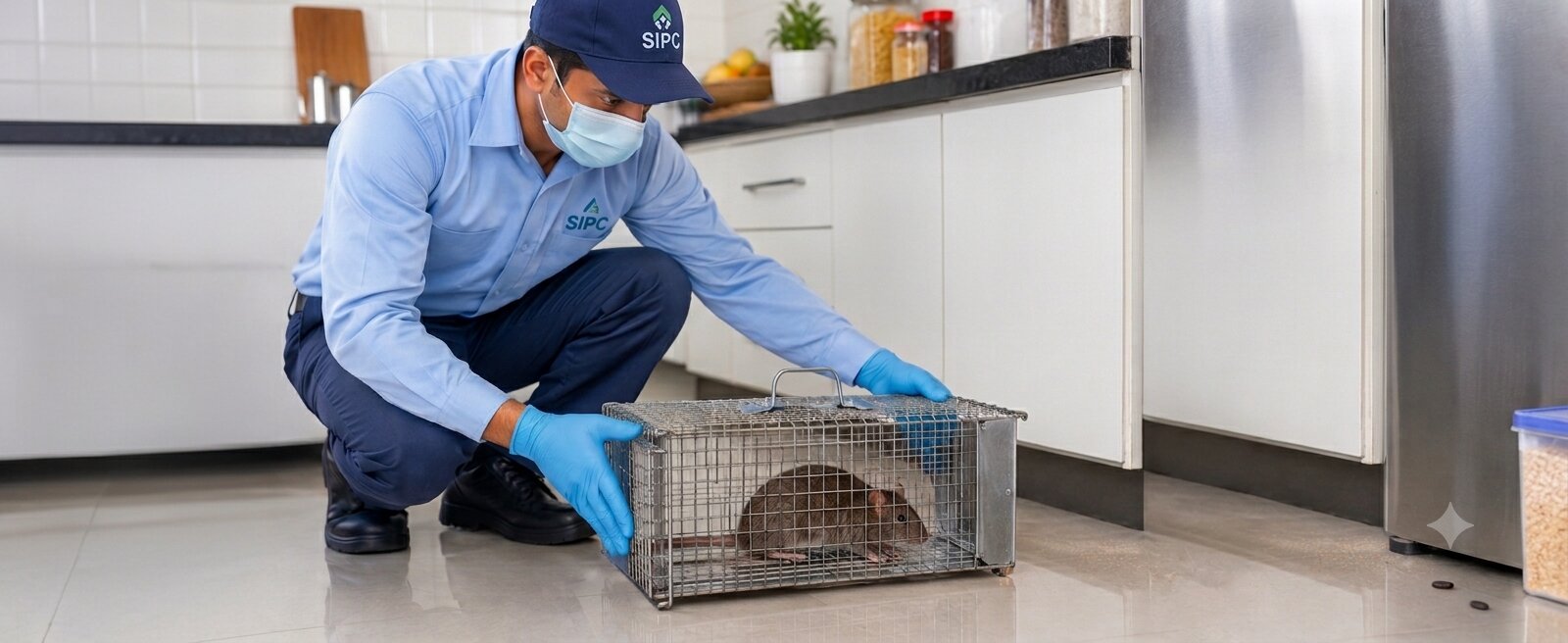
Professional rodent control services involve a structured process designed to identify rodent activity, determine contributing factors, implement appropriate control measures, and reduce the possibility of recurrence.
A professional inspection can examine areas such as:
Food and waste storage areas
Kitchens and utility rooms
Warehouses and stockrooms
Ceiling and concealed spaces
Drainage and service areas
Outdoor surroundings
Potential entry and exit points
Areas showing droppings, gnaw marks, or other evidence
Based on the inspection, the treatment plan can be selected according to the property's requirements.
Professional Rodent Control vs DIY Rat Control
Factor | DIY Rat Control | Professional Rodent Control |
Initial inspection | Usually limited to visible areas | Systematic property assessment |
Identifying activity | Based mainly on visible signs | Activity patterns and evidence are assessed |
Entry-point assessment | May be overlooked | Potential access points can be identified |
Trapping | Basic traps | Planned control based on site conditions |
Baiting | Product-dependent | Treatment selected and placed according to site requirements |
Hidden activity | Difficult to investigate | Concealed and high-risk areas can be assessed |
Prevention | Mainly property-owner managed | Proofing and prevention recommendations can be included |
Recurring infestations | Difficult to diagnose | Root causes can be investigated |
Commercial properties | Often impractical for larger sites | Suitable for structured commercial pest management |
Monitoring | Usually limited | Follow-up monitoring can be incorporated |
The main difference is approach. DIY methods generally focus on controlling visible activity, while professional rodent management is designed around inspection, control, prevention, and monitoring.
How Professional Rodent Control Works
A professional rat control service in Guwahati should not be limited to simply placing traps or bait. A structured treatment program typically involves several stages.
1. Inspection and Assessment
The property is examined for signs of rodent activity, potential entry points, food sources, harbourage areas, and movement patterns.
2. Identification of Risk Areas
Areas with increased rodent activity are identified so that control measures can be focused where they are most relevant.
3. Control Measures
Depending on site conditions, suitable methods may include trapping, baiting, monitoring devices, or other appropriate rodent-management measures.
4. Exclusion and Proofing
Where possible, potential access points are identified and recommendations are provided for sealing or improving vulnerable areas.
5. Monitoring
Monitoring helps determine whether rodent activity is reducing and whether additional action is required.
6. Preventive Recommendations
Long-term control also depends on sanitation, waste management, food storage, structural maintenance, and reducing conditions that attract rodents.
This integrated approach is particularly valuable for recurring infestations.
Why Rodent Control Is Important for Homes in Guwahati
Residential properties can provide rodents with easy access to food, water, shelter, and concealed spaces.
Kitchens, storerooms, garages, utility areas, drainage points, and areas around waste storage deserve particular attention.
Simple preventive measures such as proper food storage, regular waste disposal, reducing clutter, and sealing structural gaps can complement professional treatment.
Rodent Control for Commercial Properties in Guwahati
For businesses, rodent activity can create more than a hygiene concern. Rats and mice can damage packaging, electrical cables, stored materials, equipment, and other property.
Businesses that may require regular rodent control services in Guwahati include:
Restaurants and food businesses
Hotels and hospitality properties
Warehouses and storage facilities
Retail stores
Offices
Manufacturing units
Food-processing facilities
Commercial complexes
Institutions
Commercial properties often have larger areas, multiple access points, storage zones, and ongoing movement of goods. For this reason, a planned rodent pest control service can be more practical than relying entirely on DIY measures.
How to Prevent Rodent Infestations After Treatment
Rodent control does not end when visible activity decreases. Property maintenance plays an important role in preventing future infestations.
Maintain Proper Food Storage
Store food and raw materials in appropriate, closed containers and avoid leaving food exposed.
Manage Waste Properly
Use covered waste bins and remove food waste regularly.
Seal Structural Openings
Inspect areas around doors, windows, pipes, cables, drains, vents, and other service openings for potential access points.
Maintain Storage Areas
Keep cartons, stock, and other materials organised and avoid unnecessary clutter.
Address Water Sources
Leaking pipes, standing water, and poorly maintained utility areas can contribute to conditions that attract pests.
Inspect Regularly
Regular inspection is particularly important for restaurants, warehouses, food businesses, and other commercial properties where rodent activity can have a significant operational impact.
When Should You Contact a Professional Rodent Control Company?
Professional assistance should be considered when:
You repeatedly see rats or mice.
Droppings continue to appear after cleaning.
Food packets or stored materials are being damaged.
You notice gnawing on electrical wires.
Rodents are active in ceilings or inaccessible areas.
DIY methods have provided only temporary results.
You suspect an infestation but cannot locate its source.
Your business requires ongoing rodent monitoring and prevention.
A professional assessment can help determine the extent of the problem and the appropriate treatment strategy.
Why Choose SIPC for Rodent Control in Guwahati?
SIPC – The Pest Doctor provides professional pest management solutions for residential and commercial properties, including rodent control services in Guwahati.
Our approach focuses on understanding the infestation before implementing suitable control measures. Depending on the site assessment, rodent management may involve inspection, baiting, trapping, monitoring, entry-point identification, proofing recommendations, and preventive measures.
The objective is to address both existing rodent activity and the conditions that allow rodents to return.
With professional pest management, property owners can receive a structured solution rather than having to repeatedly deal with individual rat sightings.
DIY or Professional Rodent Control: Which Approach Is Right for You?
DIY prevention has an important role in maintaining a rodent-resistant property. Keeping food secured, managing waste, reducing clutter, and sealing accessible gaps can significantly improve general pest prevention.
However, when rodent activity is repeated, widespread, concealed, or damaging property, professional rodent management can provide a more systematic approach.
The key is to identify the source of the problem, control existing activity, and reduce the conditions that allow rodents to return.
Looking for Rodent Control Services in Guwahati?
Don't wait for a recurring rat problem to become a larger infestation.
SIPC – The Pest Doctor provides professional rat control and rodent pest control services in Guwahati for homes, offices, commercial properties, warehouses, restaurants, and other establishments.Get your property assessed and receive a rodent management solution based on your site's specific requirements.
We also provide professional rodent control services for residential and commercial properties across our service locations in South India, North & West India, Goa, and North East India.
Book Your Free Site Inspection Today
South India
North & West India
Goa