 General
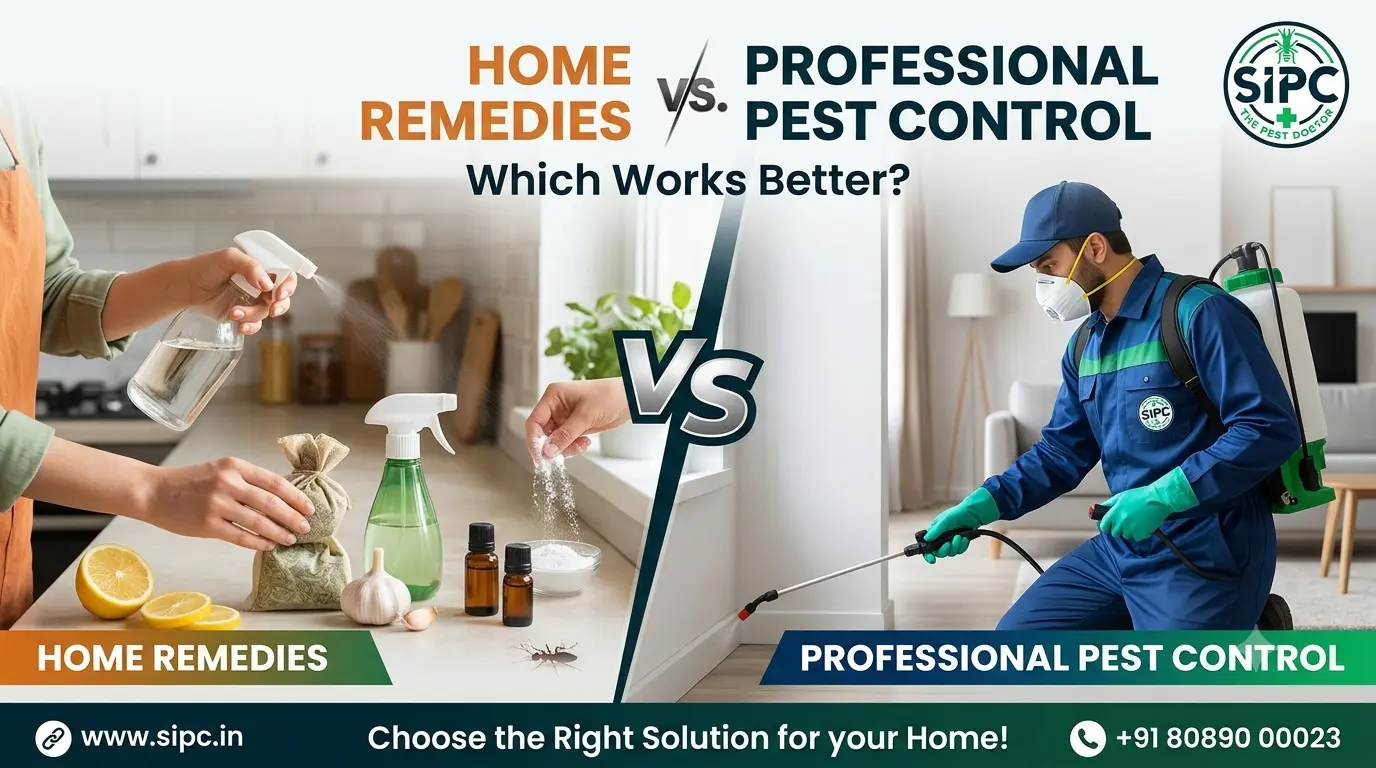
Quick answer: Home remedies can help with small, early problems and with prevention, but they rarely remove an established infestation because they do not reach the colony or the source. Professional pest control works better for termites, bed bugs, rodents, repeat cockroach problems, and any business premises, because a technician finds where the pests live and treats those places. The best approach for most homes is both: good housekeeping every day, and a professional when pests keep coming back.
If you have searched "home pest control" or "DIY pest control", you are probably deciding whether a remedy from the kitchen cupboard or a spray from the shop is enough, or whether to call someone. This guide compares the two honestly: what home remedies can and cannot do, pest by pest, and how to decide.
Home Remedies vs. Professional Pest Control at a Glance
Home remedies and store-bought sprays | Professional pest control | |
Upfront cost | Low | Higher |
Reaches hidden colonies | Rarely | Yes, after an inspection |
Finds the source | No | Yes: entry points, breeding spots, moisture |
Speed | Quick for visible pests | Depends on the pest and plan |
Lasting result | Often temporary | Longer-lasting, with follow-up |
Safety risks | Misuse, wrong dose, mixing products | Trained technicians choose and apply products |
Records and follow-up | None | Written scope, visits, and advice |
Best for | A few pests, prevention | Established or repeat infestations, businesses |
What Home Remedies Can Do Well
Prevention: Sealed food containers, covered bins, fixed leaks, and clean kitchens reduce nearly every pest problem.
Removing breeding sites: Emptying standing water stops mosquitoes breeding in containers.
Early, minor problems: A few ants or an occasional insect may be controlled with cleaning and simple traps.
Laundering: Washing and heat-drying fabrics helps in a bed bug situation, though it does not clear the infestation on its own.
Where Home Remedies Fall Short
They do not reach the colony. Most pests live in walls, drains, soil, and cracks, not where you see them.
Evidence is limited. For many popular remedies, there is little reliable evidence that they eliminate an infestation.
Sprays can scatter pests. Contact sprays can push cockroaches and bed bugs into new areas.
Eggs survive. Many pests lay eggs that survive and hatch after the remedy wears off.
Safety risks. Some products are harmful to children and pets if misused, and mixing chemicals can be dangerous. Always follow product labels and keep treatments out of reach.
Pest by Pest: Which Works Better?
Cockroaches
Home approach: cleaning, sealing food, fixing leaks, and baits or traps. This helps a small problem and prevents new ones. If roaches keep returning, the colony is probably in drains, wall gaps, or behind appliances, and a professional uses gel baiting and residual treatment on those hiding spots.
Verdict: professional for repeat problems and for restaurants.
Termites
Home approach: remedies applied to visible wood or exposure to sunlight. These may affect a few termites, but the colony lives in soil or inside walls.
Verdict: professional termite treatment is the reliable option, and for new homes, pre-construction treatment is best done before floors are laid.
Rodents
Home approach: snap traps, sealed food, and blocking gaps. Small, early problems can sometimes be handled this way. A larger problem needs sealing of every entry point and baiting and trapping along rodent routes, and poison used wrongly can leave dead rodents inside walls. Verdict: professional rodent control for anything established.
Bed bugs
Home approach: hot washing and heat-drying of bedding and clothes. This helps, but bed bugs hide in frames, cracks, and furniture, and eggs survive the first treatment.
Verdict: professional bed bug treatment, usually with a follow-up visit.
Mosquitoes
Home approach: emptying and covering containers, clearing drains, screens, and repellents. Removing breeding sites is the most effective thing you can do yourself. For housing societies, large gardens, or construction sites, professionals add larvicide and fogging.
Verdict: home steps first, professional mosquito control for larger sites and heavy seasons.
Quick Decision Guide
Situation | Better choice |
A few ants or a single insect now and then | Home remedies and cleaning |
Cockroaches reappear within weeks of spraying | Professional pest control |
Mud tubes, wood dust, or hollow wood | Professional termite treatment |
Droppings or scratching in the ceiling | Professional rodent control |
Bites at night and rust-coloured spots on bedding | Professional bed bug treatment |
Mosquitoes around coolers, pots, and tanks | Home steps first, then professional if it continues |
A restaurant, shop, hotel, or office | Professional commercial plan |
Children, pets, or elderly people at home | Professional advice on safe options |
What Does Professional Pest Control Involve?
Inspection: A technician finds the pest, the source, and the entry points.
Written scope: You get the pests, areas, methods, and any follow-up in writing.
Treatment: Products and methods are chosen to suit the pest and the space, with safety advice for children and pets.
Follow-up: A repeat visit checks results and treats any remaining activity.
Prevention advice: You are told what to change so the problem does not return.
Cost: Which Is Cheaper?
Home remedies cost less upfront, but costs add up when you buy repeated products and the problem keeps returning. Untreated termites and rodents can also cause damage that costs far more than treatment. Professional pest control costs more at the start but deals with the source, and many homes see fewer repeat problems. When comparing, ask for the scope, number of visits, and follow-up terms in writing, not only the price.
For Businesses
Restaurants, hotels, offices, and warehouses need records, scheduled visits, and treatments that suit hygiene audits, which home remedies cannot provide. See SIPC's commercial pest control services.
How to Choose a Professional Pest Control Company
Ask for an inspection before a quote.
Ask what method and products will be used, and how children, pets, and food are protected.
Get scope, price, and follow-up terms in writing.
Look for pest-specific expertise. Termites, bed bugs, and rodents each need different methods.
Check credentials. SIPC is a member of the Indian Pest Control Association (IPCA).
Find SIPC Services in Your City
Choose your city and pest to see the dedicated service page. For homes, see also residential pest control in Delhi and residential pest control in Mumbai.
City | Termite | Rodent | Cockroach | Mosquito | Bed bug |
Delhi NCR | |||||
Mumbai | |||||
Chennai | |||||
Madurai | |||||
Trivandrum | |||||
Guwahati | |||||
Palakkad |
Frequently Asked Questions
Do home remedies for cockroaches actually work?
They can help with a few roaches and with prevention, but they rarely clear a colony hidden in drains and wall gaps. If cockroaches return within weeks, a professional treatment of the hiding spots is more reliable.
Can I get rid of termites at home?
Home treatments may affect a few visible termites, but the colony usually lives in soil or inside walls. Professional termite treatment reaches those areas.
Is professional pest control safe for children and pets?
The technician explains which products are used, where they are applied, and how long to keep children and pets away from treated areas.
Is DIY pest control cheaper than professional pest control?
It is cheaper upfront, but repeated products and unresolved problems can add up, and damage from termites or rodents can cost far more than treatment.
When should I call a professional instead of trying home remedies?
Call when pests keep coming back, when you see signs of termites, bed bugs, or rodents, when children or pets are at risk from DIY products, or when you run a business.
How long does professional pest control last?
It depends on the pest and the building. Many homes need general pest control every three to four months, and results last longer when you also fix moisture, food storage, and entry points.
Get a Professional Inspection
If home remedies have not worked, an inspection finds the source. Choose your city and pest in the table above, or see SIPC's commercial pest control services for businesses.